🏆 What Are Error Coins? (The Complete 2026 Guide for Collectors)
Coins with mistakes — known as error coins — are some of the most fascinating and valuable collectibles in numismatics. From off-center strikes to clipped planchets and doubled dies, these minting mishaps turn ordinary change into extraordinary treasures.
In this cornerstone guide from Rich Off Error Coins, we’ll explore every type of coin error, how they happen, how to identify them, and what makes them valuable.
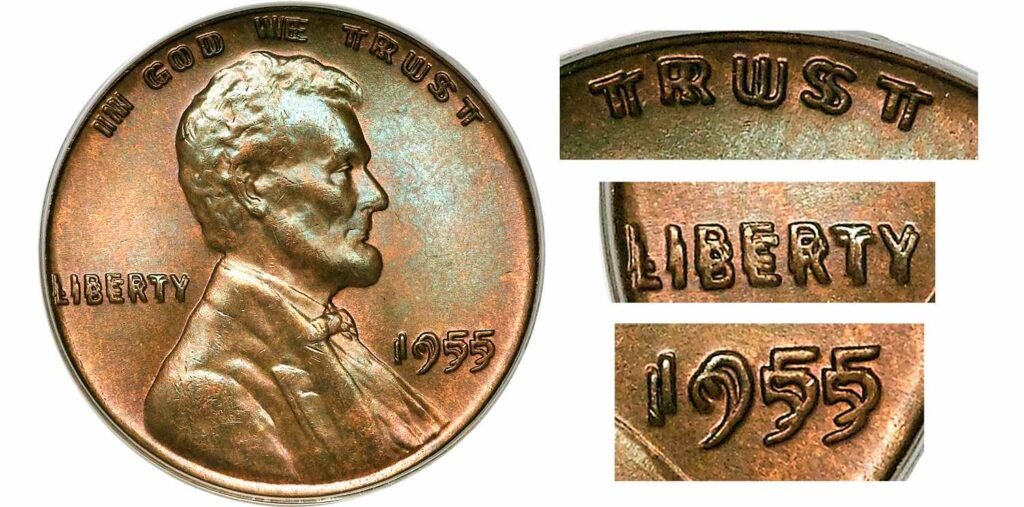
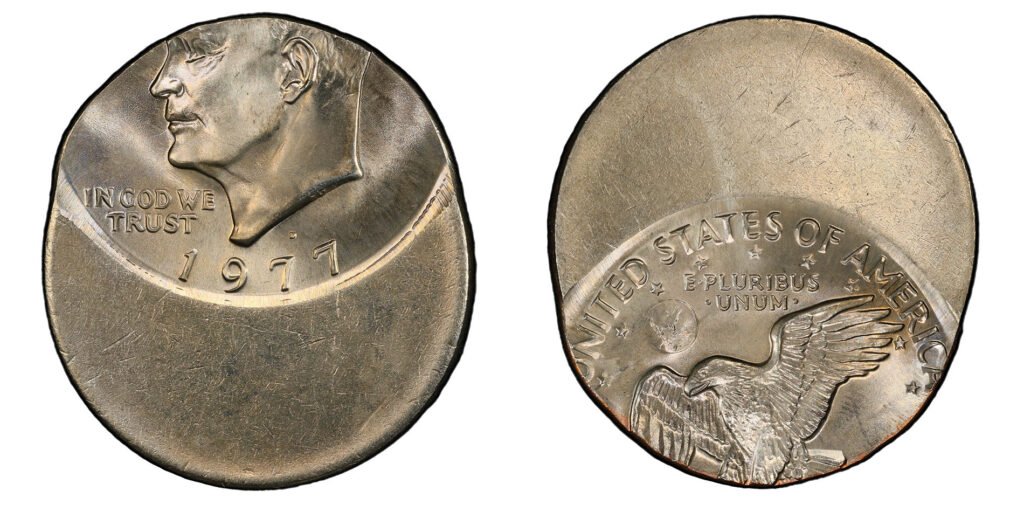
There are many different types of valuable error coins. Become a member of Rich off Error Coins to learn more!

What Are Error Coins?
| Main Topics | Subtopics |
|---|---|
| 1. Introduction to Error Coins | What Are Error Coins, Why They Happen |
| 2. The Coin Minting Process | Step-by-Step Minting Stages |
| 3. How Minting Errors Occur | Human Error, Mechanical Malfunction, and Planchet Defects |
| 4. Major Categories of Error Coins | Die Errors, Planchet Errors, Strike Errors |
| 5. Die Errors Explained | Doubled Die, Die Cracks, Die Cuds, Die Clash |
| 6. Planchet Errors Explained | Clipped Planchets, Lamination Errors, Wrong Planchets |
| 7. Strike Errors Explained | Off-Center, Broadstrike, Multiple Strike, Strike-Through |
| 8. Transitional and Wrong Metal Errors | How Composition Changes Cause Rarity |
| 9. How to Identify Error Coins | Visual Clues, Weight, and Alignment |
| 10. Grading and Authenticating Errors | PCGS, NGC, and ANACS Insights |
| 11. Market Values of Error Coins | What Affects Value, Price Examples |
| 12. How to Store and Protect Error Coins | Holders, Humidity Control, Handling Tips |
| 13. Avoiding Counterfeits | Common Scams and Fake Errors |
| 14. Famous Error Coins in U.S. History | 1955 Doubled Die, 2000 Sacagawea Mule, and More |
| 15. Where to Find Error Coins | Coin Rolls, Estate Sales, and Online Auctions |
| 16. Collecting Strategies | Building a Themed Error Collection |
| 17. FAQs About Error Coins | Top Questions from Collectors |
| 18. Conclusion | Why Error Coins Will Always Be in Demand |
1. Introduction to Error Coins
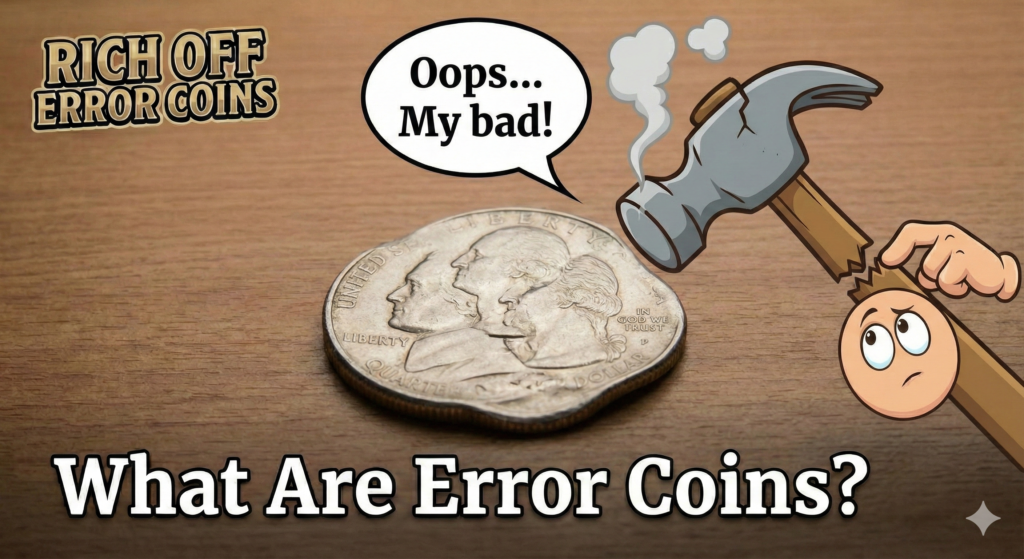
So What are error coins? Error coins are coins with unintentional mistakes made during production at a mint. These flaws can be caused by mechanical failure, human oversight, or damaged dies and planchets. The workers at the U.S. Mint are very good at their job, therefore, these mistakes are extremely rare!
When it comes to error coins, there are two main categories... Error coins and varieties... We will discuss varieties later on when we talk about doubled dies. But for now, just remember that varieteis are identical errors while error coins are not. Collectors prize error coins because each mistake is unique — no two are exactly alike. The rarity, visibility, and type of error all determine a coin’s value.
2. . The Coin Minting Process
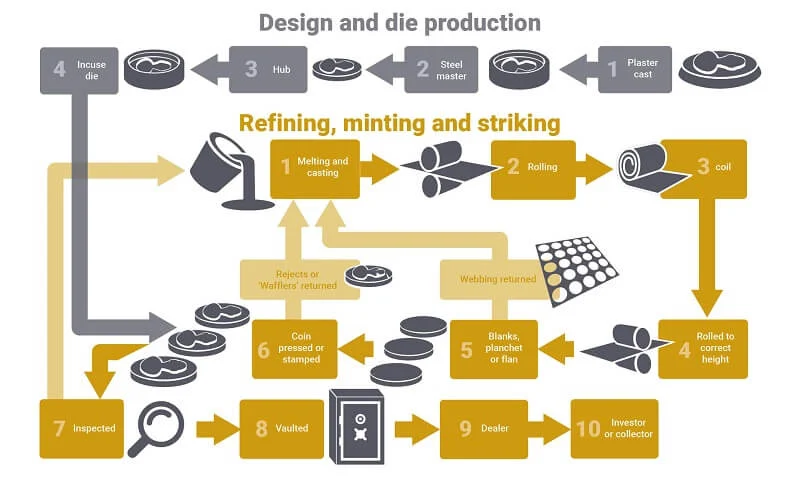
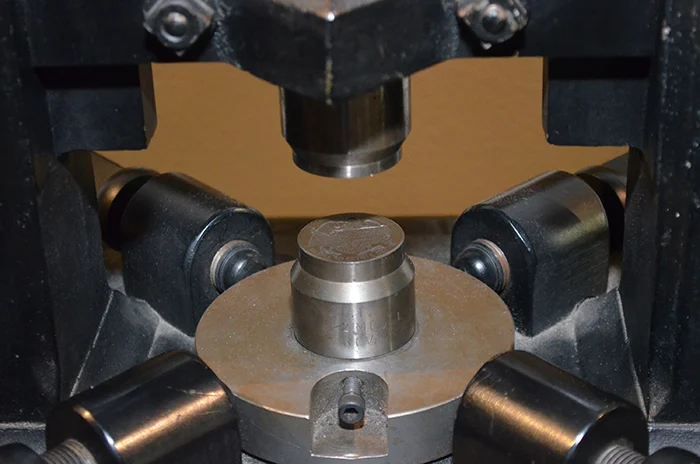
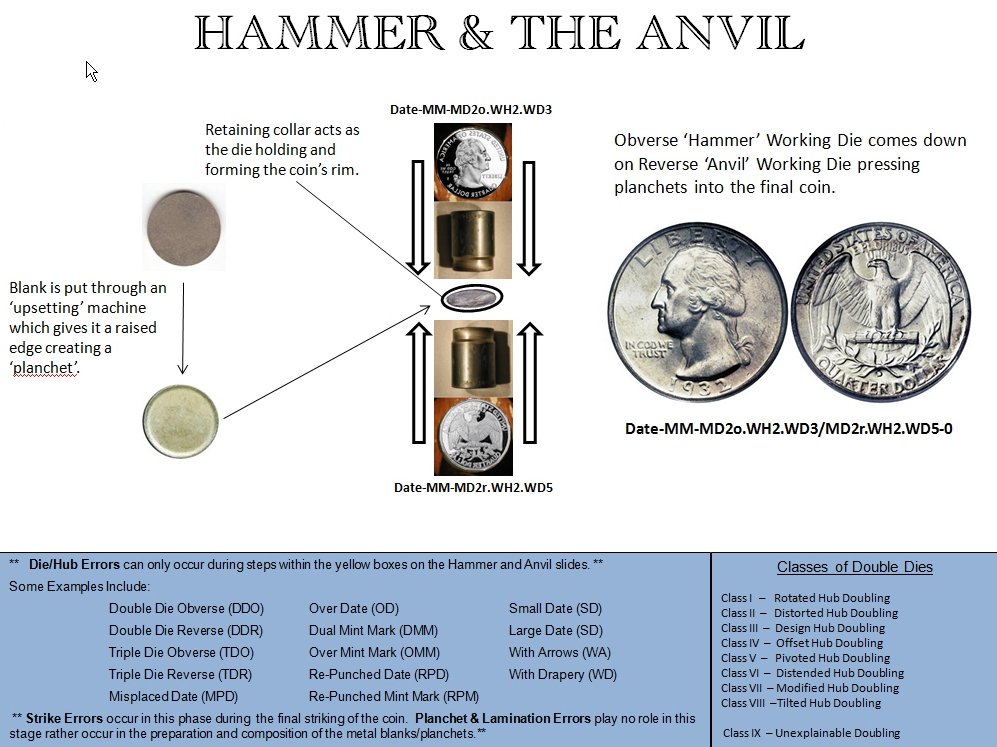
To become an expert error coin hunter, you must first understand how a coin is made at the U.S. Mint. Every mint error happens for a reason, and those reasons are rooted in the minting process itself. Once you know what should happen during production, it becomes much easier to spot when something went wrong.
Many new collectors focus only on what an error looks like—but experienced error hunters focus on how and when the error occurred. This knowledge helps you identify genuine mint errors and avoid damage or altered coins.
Let’s break down the minting process step by step and explore how errors can happen at each stage.
1. Design & Engraving
Every coin starts as an idea. Artists and engravers at the U.S. Mint create detailed designs that are first sculpted and then transferred to a master hub.
🔹 Possible Errors at This Stage
- Design hub doubling
- Missing or weak design elements
- Incorrect design details
Errors at this stage often lead to doubled die varieties, which are among the most popular and valuable error coins. These are NOT caused by the coin being struck twice, but by a misalignment during the die creation process.
2. Die Creation
The master hub is used to create master dies, which then create working dies. These working dies are what actually strike coins during production.
🔹 Possible Errors at This Stage
- Doubled dies (Class I–IX)
- Die cracks
- Cuds
- Die chips
- Die clashes
This stage is critical for error collectors because any mistake here can affect thousands or even millions of coins. That’s why some doubled die coins become famous and highly sought after.
3. Planchet Preparation
Sheets of metal are rolled to the correct thickness and punched into round blank discs called planchets. These blanks are then cleaned, weighed, and prepared for striking.
🔹 Possible Errors at This Stage
- Off-metal errors
- Wrong planchet errors
- Clipped planchets
- Lamination errors
- Improper alloy mix
If a planchet is the wrong size, weight, or metal, it can create dramatic and valuable errors—especially when struck with a die intended for a different coin.
4. Striking
Planchets are fed into coin presses and struck between two dies under enormous pressure—sometimes exceeding 100 tons.
🔹 Possible Errors at This Stage
- Off-center strikes
- Broadstrikes
- Multiple strikes
- Struck through grease or debris
- Weak strikes
- Double denomination errors
- Mule errors
This is where many of the eye-catching errors occur. These are often the easiest errors for beginners to spot while searching pocket change.
5. Quality Control
After striking, coins are inspected before being bagged and released into circulation. However, millions of coins are produced every day—so some errors slip through.
🔹 Why Errors Escape
- High production volume
- Minor errors overlooked
- Equipment wear during long production runs
When an error makes it past quality control, it becomes a collectible—and sometimes a very valuable one.
Why This Knowledge Matters
Understanding where and how errors happen helps you:
✔ Identify real mint errors
✔ Avoid damaged or altered coins
✔ Know which errors are more valuable
✔ Search smarter and faster
The best error coin hunters don’t just look—they analyze.
If you’re serious about finding error coins, be sure to join the Valuable Coin List Blog at 👉 richofferrorcoins.com/register for updated error coin lists, guides, and real-world examples.
Also, follow us on Facebook at 👉 facebook.com/finderrorcoins where collectors share finds, ask questions, and learn together.
Error coins are out there—you just need to know what to look for and why it happened. Happy hunting!
3. How Minting Errors Occur
The Three Main Causes of Minting Errors
All genuine mint errors fall into three major categories, based on when the mistake happened during the minting process. Knowing these categories helps collectors quickly identify and classify error coins.
Planchet Errors
Planchet errors occur before a coin is struck, during the preparation of the blank metal disc.
These errors happen when something goes wrong with the metal itself—such as the wrong alloy being used, the planchet being the wrong size or weight, or part of the metal being missing.
Common planchet errors include:
- Wrong planchet errors
- Clipped planchets
- Lamination errors
- Off-metal errors
Because the mistake happens early, planchet errors often affect the entire coin.
Die Errors
Die errors originate from problems with the die that strikes the coin. Since dies are used to strike thousands or even millions of coins, die errors can create collectible varieties.
These errors are built into the design and are not caused by the coin being struck incorrectly.
Common die errors include:
- Doubled dies
- Die cracks
- Die chips
- Cuds
If you see the same error repeated on multiple coins, it’s often a die error.
Strike Errors
Strike errors happen during the striking process, when the planchet is pressed between the dies.
These are some of the most dramatic and easily recognized errors, often caused by misalignment, mechanical issues, or improper pressure.
Common strike errors include:
- Off-center strikes
- Broadstrikes
- Multiple strikes
- Struck-through errors
Strike errors usually affect only a single coin, making each one unique.
Understanding which category an error falls into helps collectors verify authenticity, estimate value, and search more effectively.
5. Die Errors Explained
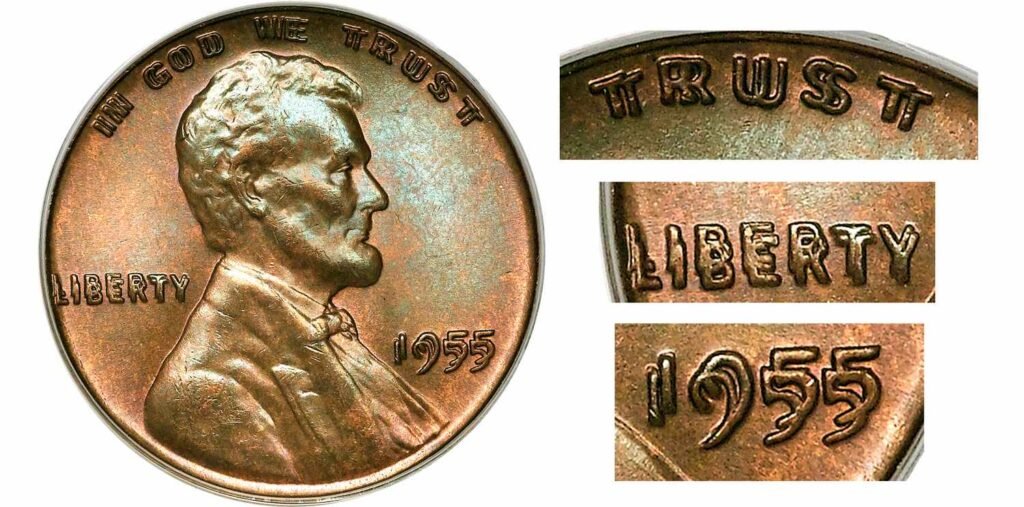
Doubled Die Errors
This is one of the most famous and valuable types of die errors. A doubled die occurs when the coin die receives two misaligned impressions during the hubbing process.
Coins like the 1955 Lincoln Cent Doubled Die and the 1972 Lincoln Cent Doubled Die are legendary among collectors. You’ll often see doubled lettering on “LIBERTY” or “IN GOD WE TRUST.”
⚠️ We’ll publish a full guide just for Doubled Die Errors next — stay tuned!
Die Cracks
When a die begins to fracture, it can leave raised lines or patterns on the coin’s surface.
Die Cuds
A die cud happens when a chunk of the die breaks away, leaving a raised blob of metal on the coin.
Die Clash
Occurs when dies strike each other without a planchet in between, leaving ghost-like mirrored images.
6. Planchet Errors Explained
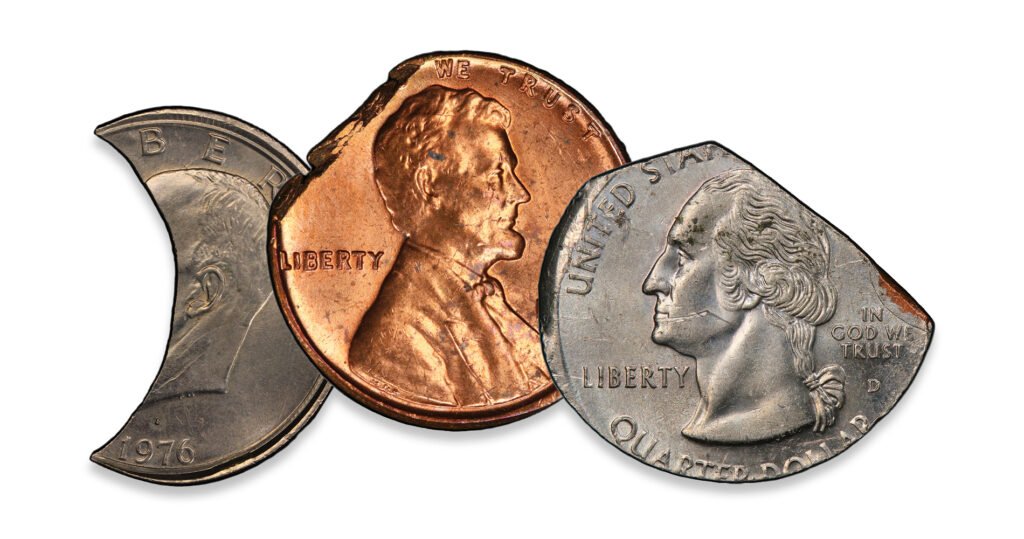
Planchet errors happen before striking:
- Clipped Planchets: A portion of the planchet is missing — looks like a “bite” out of the coin.
- Lamination Errors: The coin’s surface peels or flakes due to metal impurities.
- Wrong Planchet: A design struck on a planchet meant for another coin (e.g., a dime struck on a penny planchet).
These are some of the most visually obvious and collectible errors.
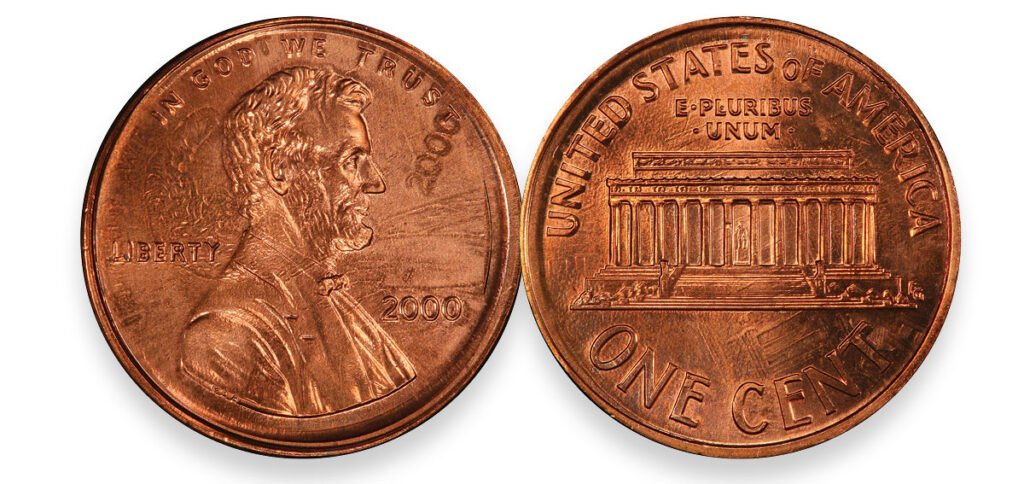
7. Strike Errors Explained
Strike errors occur during the striking phase:
- Off-Center Strikes: Coin struck off target, leaving part of the design missing.
- Broadstrikes: Coin struck without a collar, expanding the diameter.
- Multiple Strikes: Coin struck more than once, creating a “doubled” image.
- Strike-Through Errors: Foreign material (like grease or wire) interferes during striking.
8. Transitional and Wrong Metal Errors
Transitional and wrong-metal errors happen when the U.S. Mint accidentally uses the wrong planchet or design during a changeover year. These errors are some of the most famous—and valuable—in all of coin collecting.
Well-known examples include:
- 1943 Bronze Lincoln Cent
Struck on leftover copper planchets when cents were supposed to be steel during WWII. - 1944 Steel Lincoln Cent
Struck on steel planchets after the Mint returned to copper. - 1983 Copper Cent
Struck on bronze planchets even though cents were officially zinc that year. - 1992 Close AM (CAM) Cent
Circulation strike using a proof reverse that was never intended for regular coins. - 1999 Wide AM (WAM) Cent
A proof reverse mistakenly used on business-strike coins. - Foreign or Wrong-Planchet Errors
U.S. coins struck on planchets meant for other denominations or even other countries.
These errors are especially collectible because they should not exist at all, making them some of the most exciting finds for error coin hunters.
9. How to Identify Error Coins
To confirm a mint error, carefully examine the coin for signs like doubling, cracks, missing details, or off-center designs. Weigh the coin, since many genuine errors differ from standard weights, and compare it side-by-side with a normal example using a magnifier. If the coin still appears unusual or valuable, professional authentication is the best way to confirm it’s a true mint error.
10. Grading and Authenticating Errors
PCGS (Professional Coin Grading Service) – Verifies authenticity, identifies error types, and assigns grades that affect value
👉 https://www.pcgs.com
NGC (Numismatic Guaranty Company) – One of the most widely trusted grading services for U.S. and world coins
👉 https://www.ngccoin.com
ANACS – Known for attributing many varieties and mint errors, especially for collectors on a budget
👉 https://www.anacs.com
CAC (Certified Acceptance Corporation) – Reviews already graded coins and applies green or gold stickers to those meeting higher quality standards
👉 https://www.cacgrading.com
11. Market Values of Error Coins
Error coin values depend on:
- Type of error (rare or common)
- Visibility (easy to see vs. minor)
- Coin denomination & year
- Collector demand
Example: A 1955 Doubled Die Cent can fetch over $2,000, while minor die cracks might bring only a few dollars.
12. How to Store and Protect Error Coins
Use:
- Mylar flips or airtight holders
- Desiccant packs to prevent moisture
- Cotton gloves for handling
Avoid cleaning — it can reduce value dramatically.
13. Avoiding Counterfeits
Fake error coins are common. Watch for:
- Altered coins (e.g., cut and reattached pieces)
- Artificial off-center or broadstrike fakes
Only buy certified coins or from trusted dealers.
14. Famous Error Coins in U.S. History
- 1955 Lincoln Cent Doubled Die
- 2000-P Sacagawea Dollar Mule
- 1943 Bronze Cent
- 1969-S Doubled Die Obverse
Each of these coins became legendary for its rarity and public attention.
15. Where to Find Error Coins
- Coin rolls from banks
- Estate sales and flea markets
- eBay and Heritage Auctions
Persistence and knowledge are key — many collectors have found rare errors in circulation.
16. Collecting Strategies
Build a collection by theme:
- Type-based (die, planchet, or strike errors)
- Era-based (modern vs. classic)
- Mint-specific (Philadelphia, Denver, etc.)
Document each coin with photos and notes for provenance.
17. FAQs About Error Coins
Q1. What’s the difference between a variety and an error?
A variety is an intentional design change or difference in die production; an error is unintentional.
Q2. Are all error coins valuable?
Not necessarily — visibility and rarity matter most.
Q3. How can I tell if my coin is a mint error or post-mint damage?
Mint errors occur during production, while post-mint damage happens afterward.
Q4. Can error coins still be used as currency?
Yes, but their collectible value far exceeds face value.
Q5. Are modern error coins still produced?
Yes — even with advanced technology, mistakes still slip through.
Q6. Where can I learn more about specific error types?
Visit Rich Off Error Coins for upcoming deep dives on each error type.
18. Conclusion
Error coins blend history, rarity, and mystery — turning small minting mistakes into collector gold.
From doubled dies to clipped planchets, every type has its own story and market.
Whether you’re just starting or an experienced numismatist, learning about these errors helps you appreciate the hidden gems in your change — and maybe even get rich off error coins!
Check out Valuable Coin List for more information on coins.