1987 D Over D Penny Value and Identification Guide (FS-501)
 admin
adminThis post contains affiliate links. If you buy through them, we may earn a small commission at no extra cost to you. As an Amazon Associate I earn from qualifying purchases.
The 1987 D over D penny is a recognized repunched mint mark variety, not just a random damaged cent with a funny-looking mintmark. In collector language, this coin is the 1987-D/D Lincoln cent FS-501, and Variety Vista cross-references it as 1987-D RPM-003, D/D North. PCGS also recognizes it under the FS-501 attribution.
That matters because the phrase people search for is usually “1987 D over D penny,” while the attribution collectors and grading services care about is FS-501. So if you are hunting this coin in rolls, dealer junk boxes, or old copper-lot flips, you want both things in your head at the same time: the search term is 1987 D over D penny, but the correct variety label is 1987-D/D FS-501.
What is an Error Coin? Learn more here!
What is the 1987 D over D penny?
The 1987 D over D penny is a Denver-minted Lincoln Memorial cent with a repunched mintmark. On this variety, the final D was punched over an earlier D, leaving visible underlying mintmark elements. Variety Vista identifies this exact coin as D/D North, meaning the strongest extra mintmark detail is seen toward the upper part of the mintmark. It is listed as FS-501 in the modern attribution system used by collectors and grading services.
The base coin itself is extremely common. A normal 1987-D Lincoln cent was struck in copper-plated zinc, weighs 2.50 grams, measures 19.00 millimeters, and had a mintage of 4,879,389,514 pieces. So the value here is not about the date being rare. The value is about finding the correct FS-501 repunched mintmark on an otherwise common coin.
Why collectors care about FS-501
A lot of people toss around the word “error” for anything odd-looking, but this coin is better described as a recognized variety. That distinction is important. A true FS-501 attribution gives the coin legitimacy in the marketplace because collectors, attribution sites, and third-party graders already know what it is. That is a whole different animal from a beat-up cent with shelf-like machine doubling or plating blisters pretending to be special.
The CherryPicker’s Guide connection matters too. The sixth edition of CherryPicker’s Guide volume 1 covers updated Lincoln cent varieties, and this 1987-D/D is one of the modern pieces collectors have been paying more attention to. That is part of why you now see stronger sale prices than some older printed guide numbers suggest.
How to identify the 1987-D/D FS-501 penny
The whole game is in the mintmark area under the date. You are looking for extra D details beneath or north of the primary D, consistent with the D/D North description. On confirmed examples, the underlying punch is not supposed to look like random mush. It should look like real mintmark design elements from an earlier punch, not a scrape, hit, or zinc-plating mess. Variety Vista specifically attributes FS-501 as 1987-D RPM-003, D/D North, which is the key diagnostic direction to keep in mind.
Quick diagnostics checklist
Look for these things when checking a 1987-D cent:
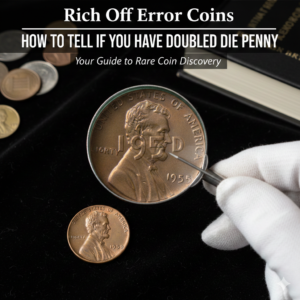
The best way to inspect one is with a 10x to 20x loupe or a digital microscope with decent lighting. Tilt the coin around under light instead of staring straight down at it like it owes you money. A real repunched mintmark often pops better when the light hits the edges at an angle. That helps separate true design remnants from glare, dirt, and split plating. The attribution itself still needs to match known diagnostics, though, not just “looks doubled to me.”
Where to look on the coin
Start on the obverse. Ignore Lincoln’s beard, the word LIBERTY, and other distractions at first. Go straight to the area below the date where the D mintmark sits. That is the hot zone. On the 1987 D over D penny FS-501, the story is almost entirely told by the mintmark. If the mintmark does not show the right repunching characteristics, it is not the coin you want.
The reverse is still useful for evaluating overall grade and surface quality, but it is not where the main variety attribution lives. A nice red reverse can absolutely help value, but the coin only becomes the desirable variety if the mintmark matches the recognized FS-501 diagnostics. No correct mintmark, no party.
Common mistakes people make
The biggest mistake is confusing machine doubling with a repunched mintmark. Machine doubling usually looks flat, shelf-like, and mechanical. It tends to shave part of the design rather than show a distinct earlier impression. A true RPM variety like FS-501 should show underlying mintmark detail related to the original hubbed punch, not just a flattened shadow.
Another mistake is getting fooled by plating issues. Since 1987-D cents are copper-plated zinc, they can show plating bubbles, roughness, split plating, and odd edges that make the mintmark look weird. That junk can imitate a variety to beginners. The underlying shape on FS-501 should still resemble a legitimate D-over-D relationship, not random corrosion or peeling surfaces.
Damage is another trap. A hit, scrape, or stain near the mintmark can create fake-looking extra lines. If the extra shape is sharp in the wrong way, cut into the coin, or does not follow the known northward repunching pattern, move on. There are plenty of ugly 1987-D cents out there trying to cosplay as FS-501. Most of them are frauds by accident.
What is the 1987 D over D penny worth?
This is where things get fun. The old book value you mentioned, around $75, clearly does not tell the whole story anymore. GreatCollections reports that it has sold 10 examples of the 1987-D/D Lincoln Cent Repunched Mintmark FS-501 RD over the past 16 years, with prices ranging from $125 to $394 in grades MS65 to MS66, including an MS66RD example that sold for $393.75.
For brown examples, GreatCollections reports 1987-D/D FS-501 BN results ranging from $11 to $150 in grades AU58 to MS60. For red-brown examples, it reports $59 to $131 in grades MS63 to MS65. That shows how much color designation and grade can swing the value. A nicer red coin can leave a lower-grade brown piece in the dust.
PCGS also lists a much stronger top-end number for the red designation, showing an auction record of $1,800 for an MS67RD example. That is not the everyday result most roll hunters will get, but it proves the upside can jump fast when the coin is high grade, well attributed, and blazing red.
Real-world value takeaway
A circulated raw example that genuinely matches FS-501 may still be worth a nice premium, but the bigger money usually comes when the coin is:
So yes, you were right: the old guide price can be too low, especially for attractive certified examples. Printed books are useful, but the market does not ask permission before moving on.
Should you get one graded?
If you think you found a genuine 1987 D over D penny FS-501 and it has strong luster, little to no wear, and a clean mintmark area, grading may be worth considering. PCGS recognizes the variety, which helps. But if the coin is circulated, spotted, corroded, or questionable, the grading fee can eat your lunch before the coin ever gets out of the slab.
A smart middle move is to compare your coin closely against recognized attribution photos first, then decide whether it is nice enough to justify submission. This is one of those coins where being correct is good, but being correct and high-grade is where the real money starts flexing.
Tips for finding a 1987-D/D penny in the wild
Your best hunting ground is still bulk 1980s Lincoln cents, dealer stock, old jars, unsorted memorial-cent groups, and collections where modern varieties were ignored. Since the base date is common, the only reason this coin gets missed is because most people do not check the mintmark closely enough. They see “1987-D” and move on. Bad move. Sometimes treasure dresses like pocket change.
When searching, separate all 1987-D cents first. Then inspect the mintmark one by one under magnification. Do not try to evaluate fifty dates at once while your eyes are crossing like bad wiring. Pull every suspicious mintmark into a second pile, then compare those candidates against known FS-501 / RPM-003 diagnostics. That is how you find the sleeper instead of guessing at ghosts.
Final thoughts on the 1987 D over D penny FS-501
The 1987 D over D penny is one of those modern Lincoln cent varieties that proves you do not need a 1909-S VDB budget to find something interesting. It is a legitimate, recognized FS-501 repunched mintmark variety, tied to 1987-D RPM-003, D/D North, and the market has already shown that solid examples can bring well over the older guide numbers.
If you are hunting one, remember the formula: check the mintmark, confirm the northward repunching, ignore fake doubling, and respect grade. That is how you separate a real 1987-D/D FS-501 from the mountain of wannabes. And in coin collecting, wannabes are everywhere. They breed in 2x2s after midnight.
You have successfully logged in.
PROCEED TO
[
My Profile ](https://richofferrorcoins.com/my-profile/)
[
Logout ](https://richofferrorcoins.com/wp-login.php?action=logout&redirect_to=https%3A%2F%2Frichofferrorcoins.com%2Flogin%2F&_wpnonce=82c9aa7bf8)
Where to find 1987 D over D Penny
Be sure to sign up for a free membership to Rich Off Error Coins if you are looking to learn about valuable coins you can find in your pocket change!
\ Get the latest news /