How to Tell If You Have a Doubled Die Penny
 admin
adminThis post contains affiliate links. If you buy through them, we may earn a small commission at no extra cost to you. As an Amazon Associate I earn from qualifying purchases.
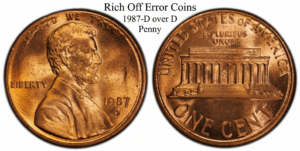
If you’re researching how to tell if you have a doubled die penny, start with one goal: separate true doubled-die doubling from common lookalikes. In other words, you want to confirm that the doubling happened on the die, not during the strike or after the coin left the Mint.
Fortunately, you can do this quickly. You just need the right spots to check, the right lighting, and a few easy diagnostics.
What Is a Doubled Die Penny?
A doubled die penny comes from a die that picked up doubling during the die-making process. Because of that, the doubling becomes part of the coin’s design. As a result, every coin struck from that die can show similar doubling.
However, many people confuse doubled dies with other types of doubling. So, before you attribute anything, make sure you know the differences.
Doubled die vs. machine doubling vs. double strike
Tools You Need to Check a Penny for a Doubled Die
You don’t need expensive gear. Instead, start with these basics:
In addition, a phone camera with a macro lens can help you compare details later. Even so, the loupe and lighting do most of the work.
Identification: How to Tell If Doubling Is a True Doubled Die
1) Look for notching and split serifs
First, focus on letter corners and number tips. True doubled dies often show:
As a rule, real doubled die doubling looks like a second design, not like damage.
2) Rule out machine doubling (the most common lookalike)
Next, watch for these machine doubling clues:
Therefore, if your doubling looks flat and step-like, you probably have machine doubling. In that case, the coin usually stays at face value.
3) Check the best hotspots on a penny
Now you can search the most reliable areas.
Obverse (heads side)
Check these first because they show strong diagnostics quickly:
Reverse (tails side)
Then check the main inscriptions, depending on the design:
4) Use lighting the right way
After that, tilt the coin under a low-angle light.
In other words, true doubling holds up under light.
5) Compare to known listings the smart way
Finally, compare your coin to known doubled die examples for that exact year. For example, don’t just match “doubling.” Instead, match:
That approach saves you time and prevents false attributions.
Value: What a Doubled Die Penny Is Realistically Worth
Value changes fast based on the exact variety and the coin’s condition. Still, you can use these realistic ranges as a starting point:
However, most “doubled” pennies people find in change show machine doubling, so they sell for one cent.
Common Mistakes People Make
Mistake #1: Calling machine doubling a doubled die
Many beginners do this. However, you can avoid it by checking for notching and split serifs. If you only see a flat shelf, move on.
Mistake #2: Confusing die deterioration doubling with a doubled die
Die deterioration makes letters look thick, swollen, or smeared. In contrast, a doubled die shows separation and distinct edges.
Mistake #3: Cleaning the coin
Cleaning kills value and makes attribution harder. So, leave the surface alone and use better lighting instead.
Mistake #4: Assuming doubling automatically means big money
Some doubled dies bring strong premiums. Meanwhile, others trade cheaply. Therefore, always identify the exact variety before you estimate value.
Quick Checklist: How to Tell If You Have a Doubled Die Penny
Use this simple routine every time:
FAQ: Doubled Die Penny Identification
How do I know if my penny is a doubled die?
You can confirm a doubled die when you see raised, rounded doubling with notching and split serifs, especially on the date, LIBERTY, or motto.
What does machine doubling look like on a penny?
Machine doubling looks flat and shelf-like. It often makes letters look thinner, and it usually changes as you tilt the coin.
Where should I look first for doubled die doubling?
Start with the date, LIBERTY, and IN GOD WE TRUST. Then move to major reverse text like ONE CENT.
Are doubled die pennies always valuable?
No. Some minor varieties sell for $5–$50, while stronger or scarcer varieties can sell for $100+. However, machine doubling usually adds no premium.
Should I get a doubled die penny graded?
If you see strong doubling, you match a known variety, and the coin looks high-grade, grading may help. Otherwise, the cost can exceed the value.
Learn Faster and Avoid Costly Misidentifications
If you want to get better at attribution (and stop wasting time on machine doubling), you’ll progress faster with a structured reference library and collector community.
Create your free account here:
Where to find how to tell if you have a doubled die penny
https://richofferrorcoins.com/registration
\ Get the latest news /