1980 DDO Penny: How to Identify the Real Doubled Die (and What It’s Worth)
 admin
adminIf you’re searching for a 1980 DDO penny, you’re looking for a Doubled Die Obverse Lincoln cent—most commonly the 1980 (Philadelphia / no-mint-mark) DDO FS-101. This variety shows true hub doubling (not damage, not “shelf-like” machine doubling), and it’s collected because the doubling is visible in key obverse areas when you know where to look.
Explanation: What “DDO” Means on a 1980 Penny
A doubled die obverse happens before coins are struck—during die creation—so the doubling is part of the design itself. That’s why strong examples show clean, separated doubling rather than a flat, smeared look.
Important detail:
- “DDO” is a variety type.
- It does not mean the coin has a “D” mint mark.
Most commonly collected 1980 DDO listings are for Philadelphia (no mint mark), and the well-known Cherrypickers variety is FS-101.
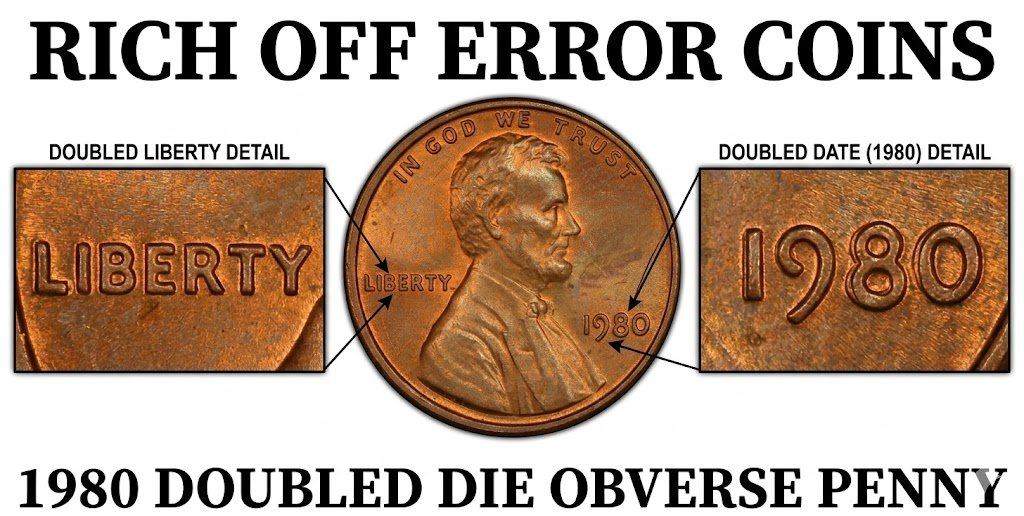
Just a quick note about some of the photos... Many of the photos on this page were generated with AI. Because of this, You can not fully trust the image to look exactly like it is supposed to look. The reason for this is because ai creates its own image that is very similar, but never the same. So in the picture above, it points to the correct locations to look for the doubling; however, if you want to see what the actual 1980 DDO Penny looks like, I suggest you viewing known examples on repituble sites like PCGS, NGC, or CAC. I will post some links to some of these coins at the end of the post.
How to Identify a 1980 DDO Penny
Tools you’ll want
- 10x loupe (minimum)
- A phone camera + good lighting (to zoom and compare)
Primary diagnostics to check (Obverse)
LIBERTY and 1980 will have the most dramatic doubling on the coin. This one can be hard to identify because sometimes all 1980 pennies will look similar to this. The trick is to train your eye and your brain to understand how this error happened and what to look for. Remember, the error did not occur during the striking process. The doubling error happened during the making of the die. That erronious die was then used to mint numerous 1980 pennies, thus causing several identical errors. This is what another 1980 ddo penny will look like:
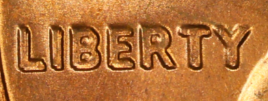
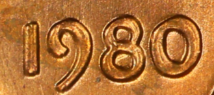
Look closely at LIBERTY and 1980. This is where the doubling is evident. There is actually no doubling on the IN GOD WE TRUST. Think about it like this... There was a doubled image imprinted in the die. That die had the image carved into it and then struck a blank coin, therefore, pushing the metal out into the die. So, the coin's image sticks up off the coin. Therefore, every doubled die will have two images that stick out off the coin. The images are almost directly on top of one another. As you can see, one image is just slightly off-set to the side of the other one. Those lines in the coin are how you positively identify a doubled die from mechanical doubline. The mechanical doubled coins will not have those lines. It will be more of a blurry doubled image.
- LIBERTY
- Date “1980”
A genuine 1980 DDO (like FS-101) typically shows crisp, notched-looking separation on letters/numerals rather than a flat “step” effect.
Quick checklist
- ✅ Doubling looks like extra design, not a smear
- ✅ Letters may show separation/notching
- ✅ Doubling is consistent across multiple devices/areas
- ❌ If it looks flat, shelf-like, or “pushed,” it’s often machine doubling (common and usually not premium)
Value: What a 1980 DDO Penny Is Actually Worth
Values depend heavily on (1) the exact variety attribution (e.g., FS-101), (2) color (BN/Brown, RB/Red-Brown, RD/Red), and (3) grade.
Realistic value ranges (typical market behavior)
- Circulated / low-grade raw: usually modest, often $5–$30 depending on strength and eye appeal (attribution matters).
- Certified mid-Mint State examples: commonly $100–$250 range depending on color and holder.
- Higher-end certified examples (auction results): can be a few hundred dollars in strong Mint State—documented sales include $360 for a PCGS MS63 RD FS-101 example.
Reality check: a “regular” 1980 cent without the confirmed doubled die is usually a common coin, and most “doubling” people see is not the collectible variety.
Getting Your 1980 DDO Penny Graded (When It Makes Sense)
Consider professional grading only if:
- the doubling is strong and matches known diagnostics, and
- the coin is uncirculated or close to it (nice luster, minimal marks)
For attribution and market acceptance, major services matter most to buyers. Auction price histories for attributed FS-101 examples are easiest to compare when the coin is certified.
Common Mistakes Collectors Make (and How to Avoid Them)
1) Confusing machine doubling for a doubled die
Machine doubling often looks:
- flat and shelf-like
- thinner/weaker letters (instead of thicker)
- inconsistent from letter to letter
2) Assuming a “D” mint mark = “DDO”
A 1980-D cent is a Denver issue; “DDO” refers to the die variety, not the mint mark. If your coin has a D, you’ll need to match it to a documented Denver doubled die listing (most people can’t—because most are not doubled dies).
3) Overpaying based on “massive doubled” listings
Online listings can be misattributed. Always compare to a reputable variety reference and/or certified examples.
FAQ (Featured Snippet Friendly)
What is a 1980 DDO penny?
A 1980 DDO penny is a 1980 Lincoln cent with Doubled Die Obverse—doubling created on the die during hubbing—most commonly collected as 1980 (P) DDO FS-101.
Where is the doubling on a 1980 DDO penny?
Collectors typically check LIBERTY, and the date “1980” on the obverse for crisp, separated doubling.
How much is a 1980 DDO penny worth?
Depending on attribution and grade, values range from single digits to low hundreds, with documented sales such as $150 (PCGS MS62 BN) and $360 (PCGS MS63 RD) for FS-101 examples.
Should I get my 1980 DDO penny graded?
Grade it when the doubling matches known diagnostics and the coin is high-grade/unworn, because certified attribution makes it far easier to sell at fair market value.
Want to learn about more than just the 1980 DDO Penny? Join Rich Off Error Coins!
Members gain access to valuable information you can't find anywhere else! Want help confirming what you found and learning which “doubling” is worth keeping? Create your free account and access more error/variety guides and collector resources here:
https://richofferrorcoins.com/registration
\ Get the latest news /