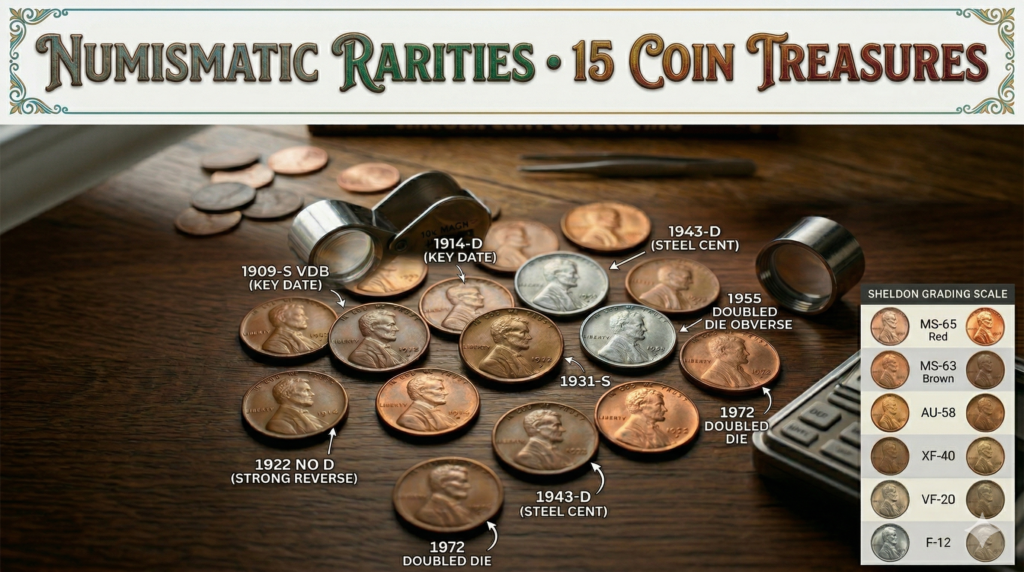
Pennies worth money are usually valuable for one of three reasons: rare dates, true mint errors, or major die varieties (like doubled dies). In 2026, most “valuable pennies” still come down to the same collector fundamentals—authenticity, condition, and correct attribution. The goal of this guide is simple: help you identify 15 legitimate pennies worth money, understand realistic value ranges, and avoid the most common (and expensive) mistakes collectors make.
Tip: For the highest-value cents listed here, professional authentication is not optional. The market strongly rewards PCGS/NGC-certified examples.
How Penny Values Work (Quick Explanation)
A penny’s value is driven by:
- Rarity: low mintage, low survival, or rare variety
- Demand: popular series (Lincoln cents are heavily collected)
- Grade: Mint State (MS) coins can be worth multiples of circulated coins
- Eye appeal: color (RD/RB/BN), spotting, damage, cleaning
- Attribution: recognized variety (PCGS/NGC/Cherrypickers-style listings)
Many viral “errors” are just damage or normal wear. Real value comes from errors/varieties that are repeatable and documented (not one-off gouges).
Identification Basics (Before You Start Searching)
Use these tools:
- 10x loupe (not a phone zoom)
- Digital gram scale (0.01g accuracy)
- Magnet (for steel vs. copper planchets)
- Good lighting + a stable surface
Key checkpoints:
- Weight: copper cents (pre-1982 mostly) ≈ 3.11g; zinc cents ≈ 2.50g
- Magnet test: steel cents stick; copper/zinc do not
- Look for “doubling” correctly: true doubled dies show rounded, notched doubling—not flat, shelf-like “machine doubling.”
15 Pennies Worth Money in 2026 (What to Look For + Realistic Values)
Values below are typical market ranges depending on grade, color, and certification. Extreme auction results exist, but your coin has to match the grade and authenticity.
1) 1909-S VDB Lincoln Cent
Why it’s valuable: key date + low mintage; iconic collector coin.
How to spot it: “S” mintmark on obverse + V.D.B. on reverse bottom.
Realistic value range:
- Circulated: $700–$2,000+
- Certified higher grade: $2,500–$10,000+ (and more in top gem)
2) 1914-D Lincoln Cent
Why it’s valuable: classic key date.
How to spot it: “D” mintmark on obverse.
Realistic value range:
- Circulated: $150–$1,500
- Better certified: $2,000–$10,000+ (condition-sensitive)
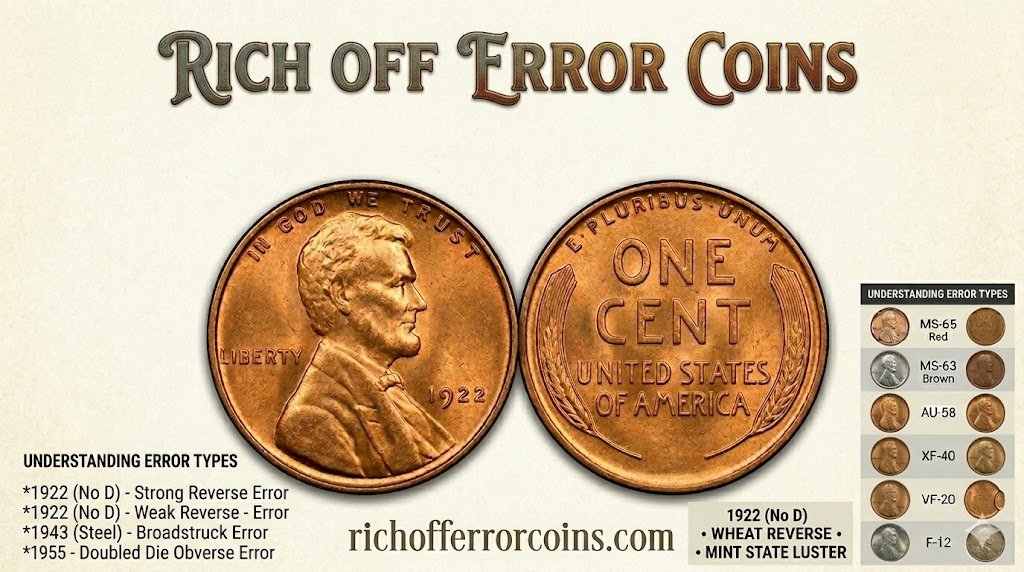
3) 1922 “No D” (Strong Reverse)
Why it’s valuable: famous missing-mintmark variety (from Denver dies).
How to spot it: 1922 date with no D mintmark; needs correct diagnostics (avoid weak strikes).
Realistic value range:
- Circulated (problem-free): $500–$10,000 depending on details/strength
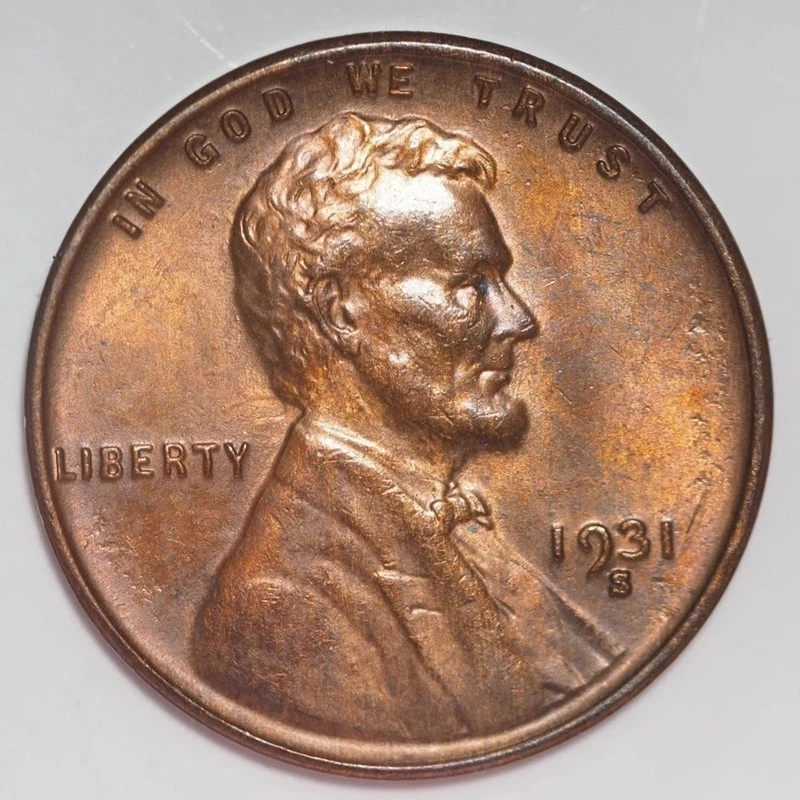
4) 1931-S Lincoln Cent
Why it’s valuable: low mintage and heavily collected.
How to spot it: “S” mintmark.
Realistic value range:
- Circulated: $75–$300
- Higher grade: $500–$5,000+
5) 1943 Bronze/Copper Cent (NOT steel)
Why it’s valuable: legendary wrong-planchet error.
How to spot it:
- Does NOT stick to magnet
- Weight near 3.11g
- Must be authenticated (many counterfeits exist)
Realistic value range: - Typically $75,000–$500,000+ depending on mint/grade
6) 1944 Steel Cent
Why it’s valuable: wrong-planchet error in reverse direction of 1943.
How to spot it:
- Sticks to magnet
- Weight about 2.70g
- Needs certification (high counterfeit risk)
Realistic value range: - Often $50,000–$200,000+ depending on mint/grade
7) 1955 Doubled Die Obverse (DDO)
Why it’s valuable: the most famous doubled die cent.
How to spot it: bold doubling on date + LIBERTY + IN GOD WE TRUST (very visible).
Realistic value range:
- Circulated: $1,000–$10,000+
- Higher grade/certified: $10,000–$50,000+
8) 1969-S Doubled Die Obverse
Why it’s valuable: major, scarce doubled die.
How to spot it: strong doubled elements on obverse with S mintmark.
Realistic value range:
- Typically $20,000–$150,000+ depending on grade/certification
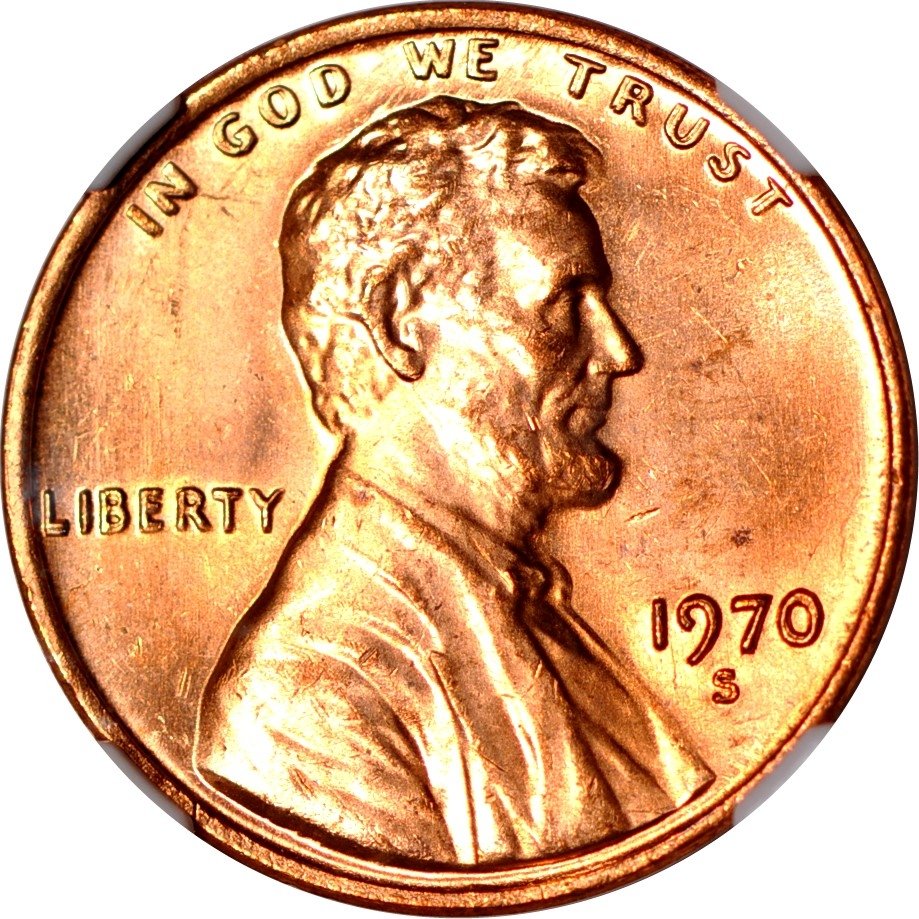
9) 1970-S Doubled Die Obverse (FS-101)
Why it’s valuable: scarce and popular.
How to spot it: strong obverse doubling; known, listed variety.
Realistic value range:
- $500–$5,000+ depending on condition and color
10) 1972 Doubled Die Obverse (Type 1)
Why it’s valuable: major variety; strong, easy-to-see doubling.
How to spot it: doubling on date, LIBERTY, and motto.
Realistic value range:
- Circulated: $100–$500
- Better Mint State: $500–$3,000+
11) 1983 Doubled Die Reverse (DDR)
Why it’s valuable: one of the strongest DDRs in the series.
How to spot it: doubling on reverse lettering (UNITED STATES, E PLURIBUS UNUM, ONE CENT).
Realistic value range:
- Circulated: $50–$200
- Mint State: $200–$1,500+
12) 1984 Doubled Die Obverse (often called “Doubled Ear”)
Why it’s valuable: major variety with visible doubling.
How to spot it: doubling in Lincoln’s ear and nearby details.
Realistic value range:
- Circulated: $20–$150
- Mint State: $150–$1,000+
13) 1992 Close AM (Philadelphia)
Why it’s valuable: rare reverse transition (Close AM on a business strike).
How to spot it: on reverse, the A and M in AMERICA are close (nearly touching).
Realistic value range:
- Typically $2,000–$5,000 (varies heavily; certification strongly recommended)
14) 1992-D Close AM (Denver)
Why it’s valuable: more obtainable than 1992-P, still premium.
How to spot it: same Close AM relationship, but with D mintmark.
Realistic value range:
- Often $500–$3,000 depending on grade/eye appeal
15) 1999 Wide AM
Why it’s valuable: proof reverse used on some business strikes; popular roll-search find.
How to spot it: wide gap between A and M in AMERICA.
Realistic value range:
- Circulated: $20–$150
- Mint State: $150–$1,000+
Common Mistakes That Cost Collectors Money
Mistake 1: Confusing machine doubling with doubled dies
- Machine doubling looks flat/shelf-like and usually adds little or no value.
- Doubled dies show rounded, notched lettering and consistent spread.
Mistake 2: Overpaying for “errors” that are just damage
Common non-errors:
- “Railroad rim” (often spooned edges)
- “Off-center” that’s actually misaligned strike look due to damage
- “Floating roof”/minor die chips marketed as rare
Mistake 3: Cleaning or polishing a coin
Cleaning can turn a $300 coin into a details-only coin worth far less.
Mistake 4: Not verifying weight and magnetism on planchet errors
For 1943 copper / 1944 steel:
- Magnet + scale checks are basic screening—but authentication is essential.
Value Tips for 2026 (Real-World Selling Guidance)
If you think you found one of the big ones:
- Do not clean it
- Take clear photos (front/back, close-ups of date/mintmark/error area)
- Compare against PCGS/NGC variety images and descriptions
- For high-risk items (1943 copper, 1944 steel, 1969-S DDO, 1992 Close AM):
budget for certification before you try to sell
FAQ (Featured Snippet Style)
What pennies are worth the most money in 2026?
The highest-value pennies are typically major errors and key varieties like the 1943 bronze/copper cent, 1944 steel cent, 1969-S doubled die, and the 1909-S VDB—especially when authenticated and high grade.
How do I know if my penny is a real error?
A real error is usually documented and repeatable (listed by major grading services or recognized references). Use diagnostics like weight, magnet test, and variety markers, and confirm with PCGS/NGC for valuable finds.
Are 1999 pennies worth money?
Most are face value, but the 1999 Wide AM variety can be worth $20–$1,000+ depending on condition and verification.
What does “Close AM” mean on a penny?
It refers to the reverse design where the A and M in AMERICA are unusually close (nearly touching). Some years like 1992 and 1992-D can be valuable with this reverse.
Should I get my penny graded?
If it’s a key date/major variety worth $200+, grading often helps. If it’s a high-counterfeit category (1943 copper, 1944 steel, 1969-S DDO, 1992 Close AM), grading/authentication is strongly recommended.
Rich Off Error Coins
If you want to learn faster, avoid fake “error coin” traps, and get help identifying real pennies worth money, create a free account here:
https://richofferrorcoins.com/registration