
How to Recognize Hidden Opportunities in Everyday Change: Why Treasure Is All About Perspective
 admin
This post contains affiliate links. If you buy through them, we may earn a small commission at no extra cost to you. As an Amazon Associate I earn from qualifying purchases.
How to Recognize Hidden Opportunities in Everyday Change: Why Treasure Is All About Perspective
Every seasoned collector or curious seeker knows this truth: to recognize hidden opportunities, you must train your mind to see what others miss. Whether you’re sifting through pocket change or navigating life’s daily routines, the difference between mere change and real treasure is all about perspective—and knowing exactly what to look for.
Why Most People Miss Hidden Opportunities
Opportunities rarely announce themselves. In the world of coin hunting, for example, the most valuable finds are often disguised as ordinary coins. The same principle applies everywhere: most people overlook what’s right in front of them because they haven’t learned how to recognize hidden opportunities. Developing this skill isn’t just about luck; it’s a mindset and a method.
Take the story of a collector who found a rare error coin in a handful of dimes from the grocery store. To everyone else, it looked like pocket change. But to someone who knew the signs—odd doubling, off-center strikes, or unusual mint marks—it was a jackpot. The key? They knew how to recognize hidden opportunities where others saw none.
The Psychology Behind Recognizing Hidden Opportunities
The ability to recognize hidden opportunities is rooted in cognitive psychology. Our brains are wired to filter out what seems unimportant, a phenomenon known as inattentional blindness. But with intention and practice, you can retrain your attention to spot patterns, anomalies, and rare details. This is why experienced collectors develop a sort of sixth sense for value in the mundane. To dig deeper into the mindset of successful treasure seekers, see our article on the psychology of coin hunting.
How to Recognize Hidden Opportunities in Everyday Change
The first step to recognize hidden opportunities is to become hyper-aware of the small details. In the context of coin hunting, this means examining every coin—no matter how common it appears—for signs of rarity or error. But this principle extends far beyond numismatics. Here’s how you can develop this skill in any area of your life:
1. Sharpen Your Observation Skills
Start by slowing down. Take the time to really look at what’s in your hands, your environment, or your daily tasks. Ask yourself: What’s different? What doesn’t belong? What feels out of place? In coin collecting, this could mean noticing a subtle doubling on a date or an unusual edge on a quarter. For practical tips on spotting value in everyday coins, check out our guide on how to spot hidden value in change.
2. Build Foundational Knowledge
To recognize hidden opportunities, you need a base of knowledge to compare against. In coin collecting, this means learning about mint marks, error types, and historical context. The same holds true for any field: the more you know, the more likely you are to spot something valuable that others miss. Consider using reference guides or Amazon search for coin books to deepen your expertise.
3. Develop a Systematic Approach
Don’t rely on memory or chance alone. Create a checklist or a routine for evaluating items or situations. For coin hunters, this might be a step-by-step process for inspecting every coin—first the date, then the mint mark, then the rim and surface. Systems reduce the odds of overlooking something important.

4. Cultivate Curiosity and Persistence
Recognizing hidden opportunities often requires looking beyond the surface and asking questions. Why does this coin look different? What could explain this pattern? Curiosity drives you to investigate further, while persistence ensures you keep searching even when finds are rare. Remember, some of the most valuable US coins ever sold were initially passed over by countless hands.
5. Learn from Mistakes and Missed Chances
Not every opportunity will be obvious, and even experienced collectors sometimes miss a gem. Reflecting on these moments helps you refine your process and sharpen your eye. Don’t be discouraged—use every mistake as a lesson in what to look for next time.
Recognize Hidden Opportunities: Turning Change Into Treasure
In the world of coins, change is everywhere, but treasure is rare. The trick is learning how to recognize hidden opportunities hiding in plain sight. Here are some practical examples:
Spotting Rare Error Coins
Error coins—such as doubled dies, off-center strikes, or die cracks—are valuable precisely because they’re uncommon. Knowing the difference between a mint error and ordinary damage is crucial. For a detailed breakdown, see our article on the difference between mint variations and damage.
Identifying Valuable Varieties
Some coins look nearly identical to their common counterparts but command massive premiums due to small differences. For instance, the 1980 DDO Penny and the 1970 S Doubled Die Penny are famous varieties that are easy to miss unless you know what to look for. Learn more about these in our guides on the 1980 DDO Penny and the 1970 S Doubled Die Penny.
Everyday Examples Beyond Coins
The skill to recognize hidden opportunities is not limited to numismatics. It applies to business, relationships, and personal growth. The job offer that seems ordinary may have hidden perks; the overlooked task may lead to recognition or advancement; the neglected corner of your hobby could hold rare finds. Perspective is everything.
Recognize Hidden Opportunities in Change: A Step-by-Step Guide
Let’s break down a practical process you can use every day:
Step 1: Define What Treasure Means to You
Not all value is monetary. Sometimes, hidden opportunities are about learning, connections, or experiences. Clarify what you’re seeking—whether it’s rare coins, knowledge, or new skills.
Step 2: Examine Everything Closely
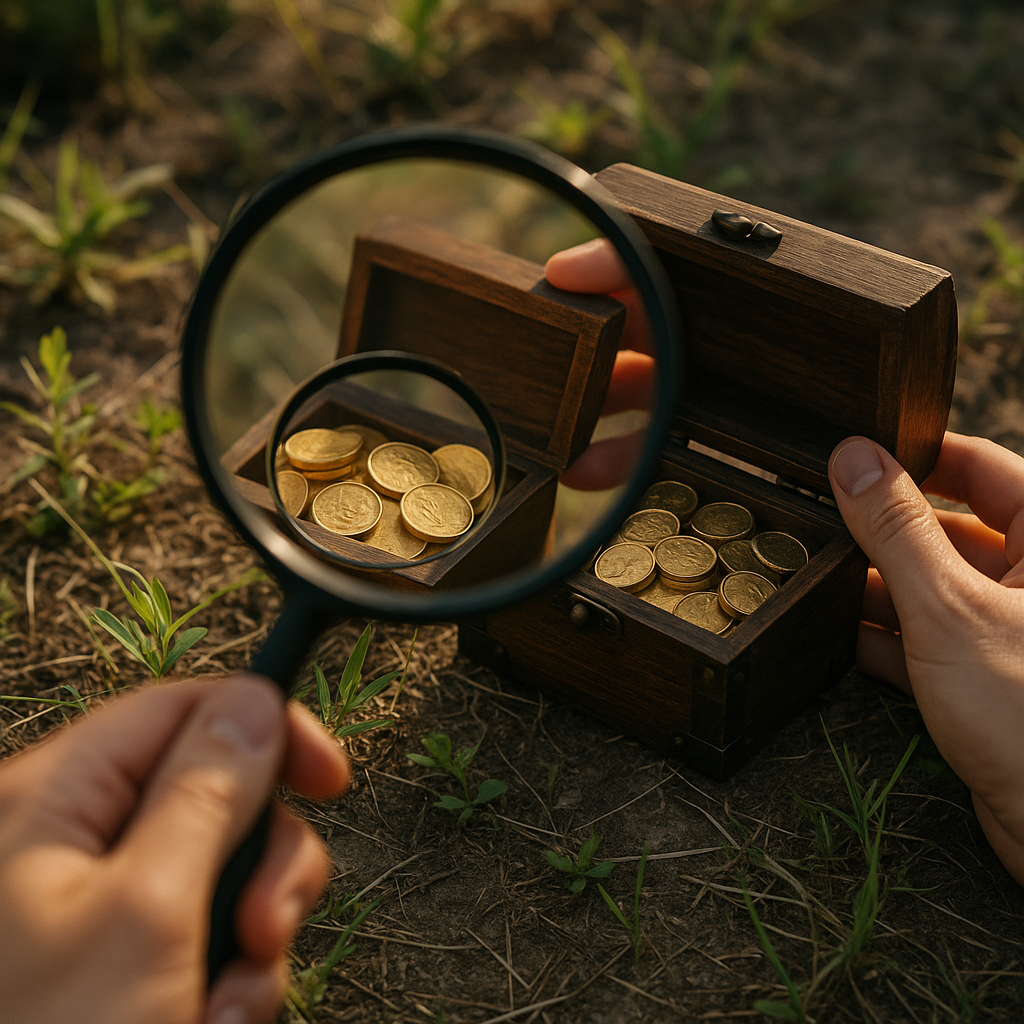
Make it a habit to look twice. In coin hunting, use a magnifier or loupe to spot tiny details. In other contexts, this could mean asking more questions or digging deeper into information.
Step 3: Compare and Contrast
Always compare what you find to reliable references or checklists. For coins, this could be a trusted guidebook or an Amazon search for coin magnifiers. In other areas, use expert advice or data to benchmark what you see.
Step 4: Record and Reflect
Keep a log of your finds, successes, and near-misses. Reflection helps you notice patterns and improve your ability to recognize hidden opportunities in the future.
Step 5: Stay Open-Minded and Adapt
Opportunities can change form. What seems unremarkable today might be recognized as valuable tomorrow. Stay flexible in your approach and ready to adapt your criteria as you learn more.
Recognize Hidden Opportunities: Mindset Shifts for Treasure Seekers
For more on how collectors refine their search techniques, read the psychology of coin hunting.
Final Thoughts: Perspective Makes All the Difference
To recognize hidden opportunities is to shift from seeing change as random to seeing it as full of potential. Whether you’re a coin collector, a business owner, or simply someone who wants to get more out of life, the ability to spot value where others see none is a skill worth cultivating. It’s not just about finding treasure—it’s about changing your perspective, every single day.
Enjoyed this guide? Sign up for a free Rich Off Error Coins membership to get more expert guides like this one sent straight to your inbox.
\ Get the latest news /