Psychology of Coin Hunting: How Collectors Think and Search Better
 admin
adminThis post contains affiliate links. If you buy through them, we may earn a small commission at no extra cost to you. As an Amazon Associate I earn from qualifying purchases.
Coin hunting is not purely a test of knowledge, and it is not simply a matter of getting lucky. The psychology of coin hunting often determines whether a collector notices meaningful details, makes a sound purchase, or talks themselves into seeing a rarity that is not there.
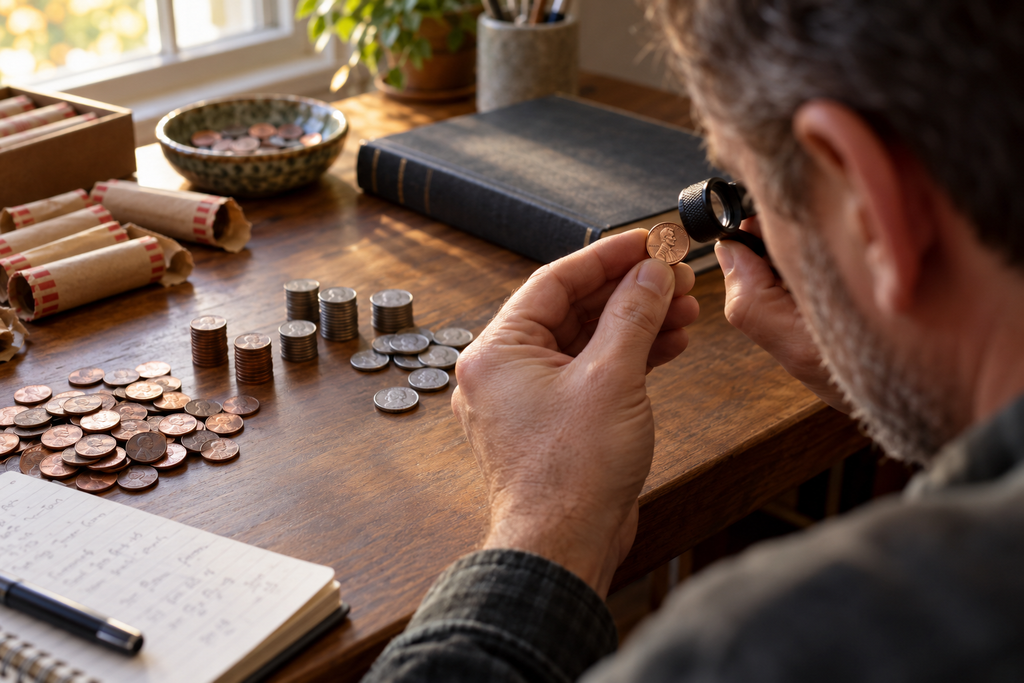
A strong reference library, a loupe, and a basic understanding of varieties all matter. So do patience, skepticism, and the ability to reset your expectations after a long stretch without a notable find. Understanding the mental side of the hobby can make searches more enjoyable while protecting you from costly mistakes.
The psychology of coin hunting begins with expectations
Every hunt starts before you examine the first coin. You may be searching a bank roll, inherited accumulation, dealer box, online listing, or a group of circulated coins at a show. In each setting, your expectations influence what you look for and how you interpret what you see.
The most common expectation problem is assuming that a promising source must contain a major discovery. A roll with an older-looking end coin, a seller's vague claim that a group is “unsearched,” or a dramatic story about an estate can create excitement before there is evidence. That excitement is understandable. It can also lead you to treat ordinary coins as clues that something exceptional is hiding nearby.
A better approach is to separate possibility from probability. A desirable coin is possible in almost any group of coins. That does not mean the source is unusually likely to produce one. Approach each coin on its own evidence:
This mindset does not make hunting less exciting. It makes a genuine find more satisfying because it survives careful scrutiny.
Psychology of coin hunting and the reward of the search
Coin hunting has a powerful built-in attraction: the next coin could be different. Most pieces may be ordinary, but each one presents a fresh possibility. That uncertainty can make even a modest search feel absorbing.
The reward is not limited to monetary value. Collectors enjoy solving a visual puzzle, learning a series, filling an album opening, recognizing a die marker, and handling an object that has traveled through commerce for years. The search itself can be rewarding even when no premium coin appears.
Trouble starts when the thrill of possibility replaces a plan. A collector who is chasing a dramatic discovery may rush through the ordinary but useful work: checking dates systematically, comparing a suspected variety to known markers, or sorting coins by denomination and mint. They may also keep buying more material to recreate the feeling of the last exciting hunt.
Give the excitement a structure. Before starting, decide what counts as a successful session. Success might mean learning one new diagnostic, sorting a batch accurately, identifying coins worth setting aside for another look, or simply enjoying an hour with no pressure to find a jackpot. This keeps the hobby from becoming a series of disappointing all-or-nothing outcomes.
Let curiosity lead, but let evidence decide
Curiosity is an asset. It prompts you to rotate a coin under light, inspect lettering, compare mint marks, and ask whether an unusual feature is genuine. The psychology of coin hunting becomes healthier when curiosity starts the investigation rather than ends it.
When something looks unusual, move through a repeatable sequence:
1. Describe the feature before naming it. Write down what you see: a raised line, a doubled-looking letter, an off-center design, a different color, or a missing element.
2. Check common non-error explanations. Consider post-mint damage, wear, corrosion, machine marks, debris, or lighting effects.
3. Compare the right areas. Genuine varieties and mint errors have patterns. Look beyond one exciting spot.
4. Use multiple views. Change the angle of light and magnification. If possible, compare with a normal example from the same design type.
5. Record uncertainty honestly. “Needs verification” is a useful conclusion, not a failure.
That final step is especially valuable. Collectors do not need to decide every question immediately.
Pattern recognition: a skill that needs guardrails
Experienced collectors often spot details quickly because they have seen many normal coins. Their minds recognize when a date position, letter shape, rim, or design element seems out of place. Pattern recognition is one reason knowledge compounds in this hobby.
But the same mental shortcut can create false positives. Once you have studied a desirable doubled die or repunched mint mark, ordinary marks may begin to resemble it. A small scratch can look like a die crack. Flat, shelf-like doubling can be mistaken for a hub-doubling variety. Damage can appear more convincing when the observer already wants the answer to be “rare.”
This is not a sign that you lack discipline. It is a normal risk of searching for subtle visual features. The answer is to use diagnostics that do not depend solely on a first impression.
Build a normal-coin reference in your mind
The best defense against overcalling varieties is to study normal examples. Learn where the design is typically weak from circulation, how a common date looks under magnification, where contact marks tend to appear, and how strike softness differs from missing design elements.
Keep a small group of ordinary comparison coins when practical. A normal coin from the same denomination and design can answer questions that memory cannot. Comparing side by side often reveals whether an apparent anomaly is truly unusual or merely a product of wear and light.
A disciplined collector asks two questions:
The second question forces you to look for confirming diagnostics rather than stopping at a resemblance.
Psychology of coin hunting and confirmation bias
Confirmation bias is the tendency to favor evidence that supports a belief while discounting evidence that challenges it. In coin hunting, it often appears after a collector finds one interesting feature and begins searching for reasons it must be valuable.
For example, a coin may show unusual-looking lettering. The hunter finds an image online that seems similar, notices a second questionable feature, and becomes increasingly confident. Meanwhile, contrary signs—such as random damage elsewhere, a lack of expected markers, or a mismatch in the claimed variety's design details—receive less attention.
The remedy is to deliberately try to disprove your own conclusion. This sounds negative, but it is one of the most practical habits a collector can develop.
For every suspected find, ask:
If the coin still holds up, your confidence is more meaningful. If it does not, you have learned something useful without spending money on an incorrect attribution.
Manage fatigue, speed, and attention
A long search changes the way you see coins. Early in a session, you may inspect too slowly because every coin is unfamiliar. Later, you may become overconfident and move too quickly, missing the very detail you hoped to find. Fatigue can also make marks seem more dramatic or make your standards less consistent.
The psychology of coin hunting improves when you match your pace to the task. Broad sorting and close attribution are different jobs. Do not try to perform both at maximum intensity for hours.
A practical workflow can look like this:
| Stage | Goal | Useful mindset |
|---|---|---|
| First pass | Separate obvious keepers and categories | Move steadily; do not diagnose every mark |
| Second pass | Check dates, mint marks, and known targets | Use a written checklist |
| Close review | Examine suspected varieties or errors | Slow down and compare diagnostics |
| Final review | Photograph, label, or return coins | Be conservative with conclusions |
Short breaks matter because they reset your visual attention. If you find yourself seeing doubling everywhere, feeling irritated by ordinary coins, or rushing to finish, that is a good time to stop. The coins will still be there when your eyes and judgment are fresher.
Avoid the sunk-cost trap
A collector may spend money on rolls, a bulk lot, a show purchase, or tools with the hope that the investment will produce a standout find. Once time or money is committed, it can feel difficult to admit that the search did not deliver what you hoped.
That feeling can lead to poor follow-up decisions: buying more from the same source without a reason, overvaluing a marginal coin, or refusing to sell or return a purchase when appropriate. The prior expense is already in the past. The only useful question is what decision makes sense now.
Set a budget and a stopping point before you begin. If you buy search material, decide whether the goal is enjoyment, building a collection, learning attribution, or seeking particular coins. Those are all valid goals, but they should not be confused. A fun afternoon of searching can be worthwhile even if it does not produce a profitable coin; it simply should not be judged by the wrong standard.
Psychology of coin hunting in online buying and selling
Online listings create their own pressure. A dramatic title, a tightly cropped image, or a claim that a coin is a rare error can make a buyer feel they must act before someone else does. Fear of missing out is especially dangerous when the photo is unclear and the attribution is unsupported.
Slow the process down. Read the listing rather than reacting only to the title. Look for sharp, well-lit images of the exact areas that matter. Ask whether the seller identifies a specific variety or merely uses broad phrases such as “possible error” or “rare find.” Be cautious when an image cannot distinguish a mint-made feature from damage.
The same restraint matters when you sell. Do not describe a coin as a recognized variety or error unless you can support the attribution. Clear photos, precise language, and an honest description serve both buyer and seller better than inflated claims. A coin can be interesting without being rare, and it can be collectible without carrying a dramatic label.
Turn judgment into a repeatable habit
The most productive collectors do not depend on excitement alone. They create routines that make good decisions easier when a batch is tedious, a coin looks tempting, or a listing feels urgent.
Try keeping a simple hunting log. Record where the coins came from, what you were searching for, what you found, and what questions remain. Include photos of coins that fooled you as well as coins that proved worthwhile. Over time, the log becomes a personal reference for recurring marks, common damage, and the types of coins that deserve closer inspection.
It also helps to maintain a “verify later” tray or envelope. This prevents two unhelpful extremes: dismissing a potentially good coin too quickly and declaring it valuable too soon. Return to the tray after a break, compare the pieces to references, and seek a knowledgeable second opinion when the attribution matters.
The psychology of coin hunting is ultimately about balancing openness with restraint. Stay alert enough to notice the unexpected, skeptical enough to test it, and patient enough to enjoy the search when the answer is simply that a coin is ordinary. Those habits will improve your eye, your collection, and your experience of the hobby.
Where to find psychology of coin hunting
Enjoyed this guide? Sign up for a free Rich Off Error Coins membership to receive practical coin-hunting guides, identification tips, and collecting insight in your inbox. It is a simple way to keep building sharper habits with every search.
\ Get the latest news /