1969-S Doubled Die Penny: Value, Identification, History & FS-101 Diagnostics
 admin
admin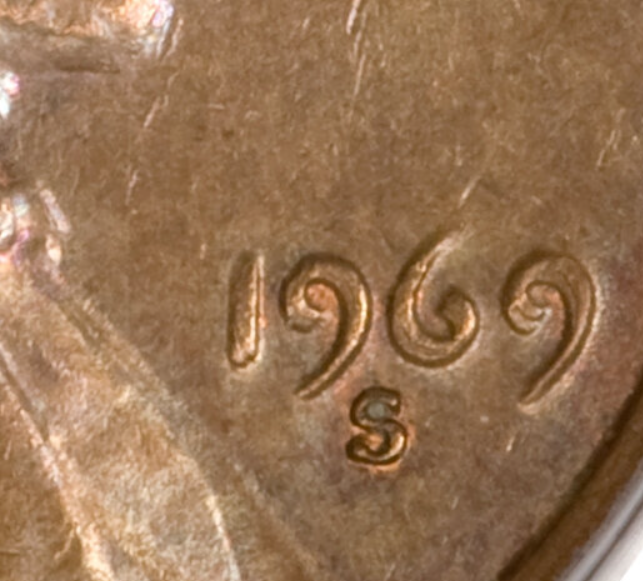
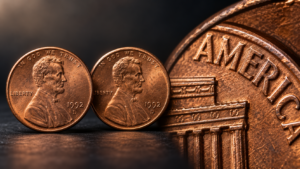
A 1969-S Lincoln penny might look like ordinary pocket change, but one extremely rare variety can be worth tens of thousands of dollars — and in exceptional condition, potentially six figures.
The 1969-S Doubled Die Obverse Lincoln Cent, known to variety collectors as FS-101, CONECA DDO-001, WDDO-001, and VP-001, is one of the most dramatic and desirable doubled dies in the entire Lincoln cent series. NGC describes the variety as showing very strong doubling on IN GOD WE TRUST, LIBERTY, and the date.
This isn't the type of coin where you need to convince yourself that you see something under 30× magnification. On a genuine example, the doubling can be bold, obvious, and unmistakable once you know what you're looking for.
There is one catch.
Millions of normal 1969-S pennies exist, machine doubling is extremely common on this date, and the famous 1969-S DDO has been surrounded by counterfeiting stories since almost the day it was discovered.
That makes proper identification absolutely critical.
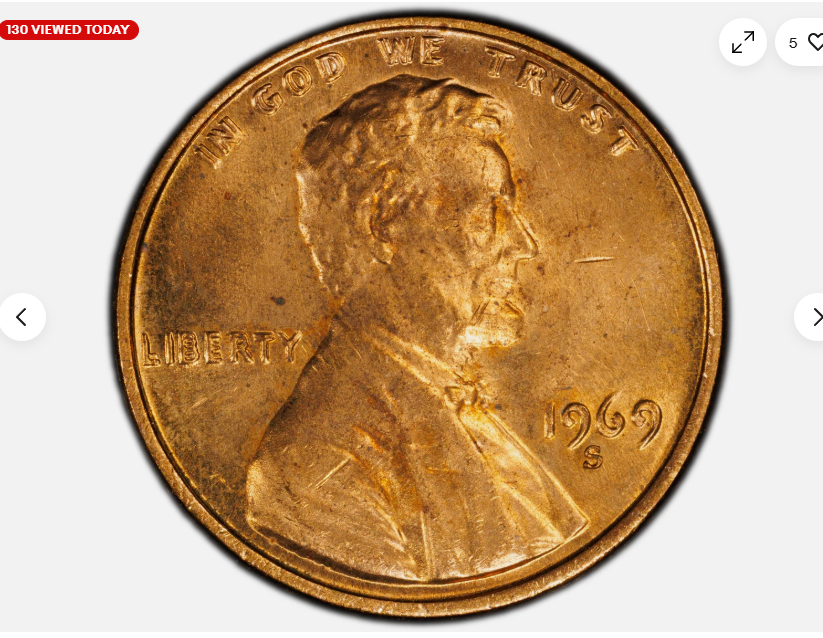
Picture 1: Genuine 1969-S Doubled Die Obverse
The coin below is an authenticated example of the 1969-S Doubled Die Obverse. Notice how the doubling is part of the lettering and date rather than simply looking like a flattened shadow beside the design.
Image courtesy of PCGS via Coin World. Coin World identifies this example as a genuine 1969-S Doubled Die Obverse Lincoln cent.
What Is the 1969-S Doubled Die Penny?
The famous coin is a 1969-S Lincoln Memorial cent struck at the San Francisco Mint from a doubled obverse die.
The normal 1969-S Lincoln cent had an enormous mintage of 544,375,000 coins, so simply finding a 1969 penny with an S mintmark does not make it rare. PCGS lists the standard 1969-S cent at that 544.375 million mintage.
The valuable coin came from a particular working die whose design was doubled during the die-manufacturing process.
That distinction matters.
The 1969-S DDO is better described as a die variety than as a one-of-a-kind mint error. Once the doubled die was installed in a coin press, every coin struck by that die could reproduce the same doubled design. That is completely different from something such as an off-center strike, which happens individually during the striking of a particular coin.
For Rich Off Error Coins, this coin belongs squarely in the Varieties → Lincoln Cents → Memorial Cents → Doubled Dies category.
Official Attribution Numbers
Collectors may encounter several different names for the same famous variety. They refer to the same major 1969-S doubled die.
| Attribution system | Designation |
|---|---|
| Cherrypickers' Guide / Fivaz-Stanton | FS-101 |
| Older Fivaz-Stanton number | FS-028 |
| CONECA | DDO-001 / 1-O-I |
| NGC VarietyPlus | VP-001 |
| Wexler | WDDO-001 |
| Crawford | CDDO-001 |
NGC confirms the FS-101, DDO-001 and VP-001 cross references, while Wexler identifies the variety as WDDO-001 and cross-references the other major attribution systems.
Why Is the 1969-S Doubled Die So Valuable?
There are three ingredients that make a variety explode in value: dramatic appearance, popularity, and scarcity.
The 1969-S DDO has all three.
Its doubling is massive enough to be recognized without extreme magnification. Lincoln cent collectors know the date. Error and variety collectors know the date. Even collectors who don't normally chase doubled dies frequently recognize the 1969-S.
Then there is the supply problem.
Although hundreds of millions of regular 1969-S cents were struck, only a tiny number of genuine FS-101 coins are known.
Current estimates are not perfectly consistent. PCGS's September 2026 price guide labels the variety as having about 100 known, while earlier PCGS publications and various auction descriptions used substantially lower estimates. Certification totals can also include coins that were submitted more than once, making an exact surviving population difficult to establish.
The safest conclusion is simple:
The genuine 1969-S FS-101 remains extremely scarce.
How the 1969-S Doubled Die Was Created
The doubling was created before the coin was struck.
That is the part new collectors sometimes misunderstand.
A doubled die is not created because a finished coin gets hit twice.
During this period, working dies were created using hubs containing the coin's design. If alignment changed between impressions during the hubbing process, portions of the design could appear in two different positions on the finished working die.
Every coin struck by that working die could then receive the doubled design.
Wexler classifies the famous 1969-S variety as a very strong Class I rotated-hub doubled die with counterclockwise spread. Its doubling appears not only on the lettering and date but also on portions of Lincoln's jacket, lapel and vest.
PCGS has likewise described the variety as a Class I Rotated Hub with counterclockwise doubling.
Interestingly, Wexler notes that the Mint modified Lincoln cent die production around this period. Problems getting sufficiently deep hub impressions led to changes that allowed the hub to penetrate farther into the die, but those changes also increased the opportunity for dramatic Class I doubled dies to occur. Major 1969-S and 1970-S varieties followed.
How to Identify a Genuine 1969-S Doubled Die Penny
You should never identify this coin from only one tiny area.
A genuine FS-101 should show the correct combination of diagnostics.
The three first places to examine are:
1969
LIBERTY
IN GOD WE TRUST
These areas contain the strongest and easiest-to-recognize doubling.
Check the Date First
The date is usually the first place collectors look.
On the genuine variety, all four digits of 1969 show significant separation. The doubled image has dimension and rounded contours instead of simply appearing like part of the number was shaved away.
PCGS describes the doubling as particularly prominent on the date and notes that the separation moves generally toward the southeast.
Look especially closely at the curves and edges of the 6 and 9.
You aren't looking for a tiny line.
You are looking for another portion of the actual design.
If you're staring at a 1969-S penny for five minutes trying to convince yourself that you can maybe see doubling under bright light, you've probably already answered your question.
The famous FS-101 is dramatic.
Check LIBERTY
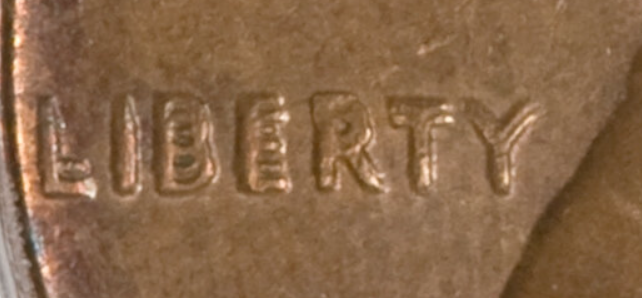
The word LIBERTY is one of the best confirmation points on the coin.
Letters such as the B, E and R show obvious separation and internal details. Genuine hub doubling retains rounded contours because both images were part of the working die.
This is completely different from the flat shelf commonly produced by mechanical doubling.
Picture 2: Doubling on LIBERTY
This close-up shows the dramatic separation on letters in LIBERTY.
Image courtesy of John Wexler via Coin World. Coin World notes that strong doubling can clearly be seen on LIBERTY.
Look at the internal structure of the letters rather than simply looking for an extra edge.
That distinction will eliminate a huge number of false positives.
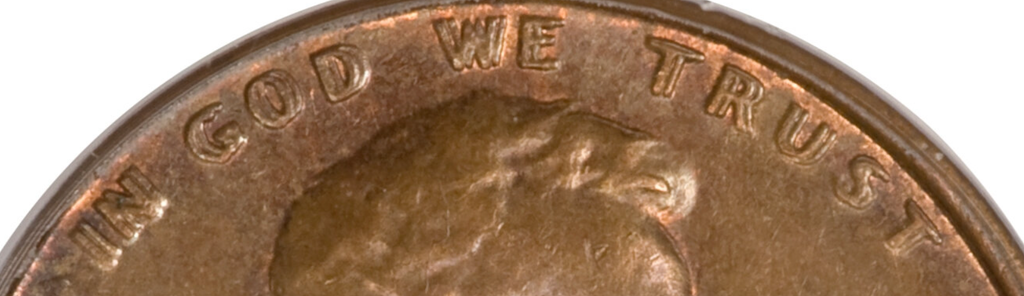
Check IN GOD WE TRUST
The motto across the top of the obverse provides another excellent identification point.
The doubling should appear across multiple letters rather than being isolated to a single character.
NGC specifically identifies IN GOD WE TRUST as one of the three primary areas displaying the variety's exceptionally strong doubling.
Picture 3: Doubling on IN GOD WE TRUST
The close-up below shows authentic hub doubling in the motto.
Image courtesy of John Wexler via Coin World. The published diagnostic photograph demonstrates extensive doubling on the motto.
Again, notice that this does not resemble a thin scratch or a flattened shadow.
There are two recognizable design impressions.
The S Mintmark Should NOT Match the Doubled Date
This is one of the most important facts to remember about the 1969-S DDO.
The famous doubling does not include the S mintmark.
That may sound strange at first.
If the date is doubled, why wouldn't the mintmark be doubled?
Because the S was not part of the hubbed design when the doubled die was created.
At the time, mintmarks were added to individual working dies in a separate operation. The die could therefore contain dramatic hub doubling on the date and lettering while the later-applied mintmark remained unaffected by that particular doubling event.
PCGS specifically notes that the genuine 1969-S DDO should not have hub doubling on the mintmark.
That makes the mintmark a powerful screening tool.
Suppose your coin has a strange-looking doubled 1969 and an equally flattened doubled S moving in the same direction.
That should immediately raise suspicion that you're looking at machine doubling rather than FS-101.
There is an important nuance, though: don't turn this into an oversimplified rule that says, "Any weird-looking S means the coin is fake."
Other forms of strike doubling, damage or unrelated mintmark characteristics can affect what the S looks like.
Use the complete diagnostic pattern.
1969-S Doubled Die vs. Machine Doubling
This is where most supposed discoveries fall apart.
1969-S cents are well known for mechanical or machine doubling.
Mechanical doubling occurs during the striking process rather than while the working die is being created.
The result usually appears very different.
| Genuine FS-101 doubled die | Machine / mechanical doubling |
|---|---|
| Rounded secondary design | Flat or shelf-like secondary area |
| Strong separation | Often looks shaved or pushed sideways |
| Consistent known pattern | Can vary from coin to coin |
| Strong on date, LIBERTY and motto | May affect random areas |
| Mintmark not part of FS-101 hub doubling | Mintmark may be mechanically doubled |
| Can show notching or separated design contours | Usually lacks true notching |
| Extremely valuable | Usually little or no added value |
Wexler describes machine doubling as having a characteristically flat, shelf-like appearance and points out that 1969-S cents with mechanical doubling may show the effect on both the date and mintmark.
That is why pictures posted online with a doubled-looking S frequently turn out to be ordinary coins.
Advanced Authentication: Look at the Reverse
Here's where things get interesting.
Many people spend so much time staring at the front of the coin that they forget one of the strongest tools for authenticating a genuine 1969-S DDO is found on the reverse.
The known FS-101 die pair has identifiable die scratches and polishing lines.
Wexler lists several reverse markers, including strong die scratches extending from the T in UNITED, a curved scratch near the N in CENT, X-shaped scratches between letters of E PLURIBUS UNUM, and additional scratches around AMERICA.
Coin World has also reported that genuine examples display raised die-polish lines on the reverse, including diagnostic lines near the E of UNITED and around the R and I of AMERICA.
These markers are extremely important because someone can damage a normal coin to create fake-looking doubling.
It is much harder to reproduce an entire known die-marriage fingerprint across both sides of the coin.
Another Obverse Die Marker
Advanced collectors can also check the obverse for a short die scratch running east from the upper-right portion of the T in LIBERTY, a marker documented by Wexler for WDDO-001.
Do not use a single die scratch as your only authentication method.
Dies change while being used. Scratches can weaken, new marks can form, and circulation wear can make markers difficult to see.
The correct approach is to combine the major doubling pattern with as many known markers as possible.
One of the Strangest Stories in U.S. Coin Collecting
The history surrounding this penny is almost as incredible as the coin itself.
Around the same period that the legitimate 1969-S doubled die appeared, counterfeiters Morton Goodman and Roy Gray were involved in producing fake 1969 doubled die cents without the San Francisco mintmark.
According to PCGS, sophisticated electrical-discharge equipment was used to manufacture counterfeit dies. The Secret Service became involved and began recovering the counterfeit coins.
Then collectors began reporting something that looked dangerously similar:
A spectacular doubled die dated 1969-S.
The problem was that law enforcement was already hunting fake 1969 doubled dies.
The genuine coin walked straight into the worst possible situation.
Collectors Cecil Moorhouse and Bill Hudson are credited with discovering authentic examples around 1970. PCGS reports that genuine 1969-S coins became entangled in the counterfeiting investigation and that some legitimate examples were reportedly destroyed before authorities recognized the authentic variety.
Eventually, the genuine 1969-S DDO was accepted for what it really was:
A legitimate U.S. Mint die variety.
Few coins can claim a history involving Lincoln cents, counterfeit dies, the Secret Service and genuine rarities accidentally caught in the middle.
The 1969-S DDO can.
Genuine Coins Are Still Being Discovered
The craziest part of this story is that new examples have continued to turn up decades after the coins were struck.
In 2007, collector Michael Tremonti discovered a high-grade example while examining rolls of 1969-S cents. PCGS authenticated it as MS64 Red.
That coin later sold for an astonishing $126,500 in 2008.
Another remarkable discovery occurred decades later when a Texas collector searching boxes of rolled cents found an example that PCGS eventually graded AU55 Brown. Coin World reported that the coin had remained undiscovered for nearly 50 years after it was struck.
Stories like these explain why collectors still inspect every old 1969-S cent they encounter.
The odds are brutal.
But the coins aren't necessarily all accounted for.
How Much Is a 1969-S Doubled Die Penny Worth?
This is definitely not a $50 or $500 variety.
A genuine authenticated example can be worth five figures even when circulated.
PCGS's September 2026 price guide shows Brown examples beginning around $13,000 at VF35, approximately $13,500 at XF40, around $20,000 at AU55, and approximately $28,500 at MS60 BN. PCGS lists MS60 examples at approximately $30,000 RB and $31,500 RD.
Once high-grade Mint State coins retaining significant original red color enter the picture, values can rise dramatically.
Recent auction results show just how serious this market is.
| Coin | Sale | Price |
|---|---|---|
| PCGS MS63 BN | Stack's Bowers, March 2026 | $26,400 |
| PCGS MS63 RB | Stack's Bowers, June 2025 | $43,200 |
| PCGS MS64+ RD CAC | Heritage, January 2026 | $97,600 |
| PCGS MS64 RD | Heritage, January 2008 | $126,500 |
The 2026 MS63 Brown sale and PCGS guide information are documented by PCGS, while the January 2026 MS64+ Red FS-101 brought $97,600 at Heritage. The famous 2008 MS64 Red realization of $126,500 is also documented in PCGS CoinFacts.
These numbers should be treated as market references, not guaranteed selling prices.
With a coin this scarce, two examples with the same numerical grade can still bring very different prices depending on eye appeal, surfaces, color, provenance, CAC approval, buyer competition and current demand.
Why RD, RB and BN Matter So Much
Copper changes color as it ages.
Professional grading services therefore attach a color designation to Mint State copper coins.
BN means Brown.
RB means Red-Brown.
RD means Red.
The more original Mint red that survives on a rare 1969-S DDO, the more aggressively collectors may compete for it.
That is why an MS63 Brown example and an MS63 Red example are not necessarily comparable simply because both carry the number 63.
Color can be a major component of value.
And this brings us to another important warning.
Never Clean a Possible 1969-S Doubled Die
If you think you found one, do not clean it.
Don't polish it.
Don't dip it.
Don't rub it with baking soda.
Don't use vinegar.
Don't take a pencil eraser to the date.
And absolutely don't break out the Dremel because you saw something on YouTube at 2:00 in the morning.
Original surfaces matter tremendously on valuable copper coins.
A genuine 1969-S DDO is valuable enough in circulated condition that there is absolutely no reason to "make it look better."
Put the coin in a non-PVC holder and leave it alone.
What Should You Do If You Think You Found One?
Your first goal should be identification, not selling.
Confirm that the coin is dated 1969 and carries the S mintmark. Compare the date to authenticated FS-101 photographs. Check LIBERTY. Check IN GOD WE TRUST. Inspect the S independently. Compare the secondary design with known examples of machine doubling. Then examine the reverse for known die markers.
If the major diagnostics line up, stop handling the coin unnecessarily.
At that point, professional authentication becomes worth considering.
Because the potential value is so high — and because counterfeits, alterations and misidentified machine doubling are such serious issues — a suspected genuine coin should eventually be authenticated by a recognized grading service such as PCGS or NGC before anyone starts throwing five-figure valuations around.
Can You Find a 1969-S Doubled Die in Circulation?
Technically, yes.
Real examples have been discovered in rolls and circulated groups of cents decades after 1969.
Realistically, though, this is an extremely rare variety.
You're far more likely to find an ordinary 1969-S penny or a mechanically doubled example.
But that's part of what makes hunting valuable varieties addictive.
You aren't checking 1969-S cents because every tenth roll contains one.
You're checking them because one genuine coin can be life-changing money compared with its one-cent face value.
Does a Doubled S Mean You Found the Rare Variety?
No.
In fact, a doubled-looking mintmark can be evidence that you're looking at mechanical doubling.
Remember: the famous FS-101 hub doubling happened before the S mintmark was added to the working die.
The correct identification should come from the date, LIBERTY, IN GOD WE TRUST, the overall direction of doubling, and supporting die markers.
Never authenticate a 1969-S DDO from the mintmark alone.
Is the 1969-S Doubled Die a Proof Coin?
No.
The recognized FS-101 variety is a regular circulation strike, not the 1969-S proof cent.
Both PCGS and NGC catalog the famous variety as a regular/Mint State issue rather than a proof variety.
Collectors sometimes examine proof cents with strange reflections or strike characteristics and mistake those effects for the famous doubled die.
They aren't the same coin.
Is It a Doubled Die or a Double Die Penny?
You'll see both phrases used online, but the correct numismatic term is doubled die.
The die itself carries the doubled design.
Therefore:
1969-S Doubled Die Penny is correct.
1969-S Doubled Die Obverse is even better.
1969-S DDO is the common collector abbreviation.
"Double die penny" remains an extremely common search phrase, so it's still useful when discussing the coin online — particularly for SEO — but doubled die is the proper terminology.
The Bottom Line
The 1969-S Doubled Die Obverse Lincoln cent FS-101 is one of the ultimate modern U.S. coin varieties.
It combines dramatic visible doubling, extraordinary scarcity, huge collector demand and one of the strangest histories of any Lincoln cent ever produced.
If you find a 1969-S penny, inspect the date.
Then check LIBERTY.
Then check IN GOD WE TRUST.
And remember the biggest clue of all: the famous doubled die does not require the S mintmark to share the hub doubling.
Most coins you inspect will be normal.
Some will have worthless machine doubling.
But every once in a while, someone opens an old roll, looks through a jar of pennies or searches a forgotten collection and realizes they're holding something that should never have survived unnoticed for half a century.
That's why we keep looking.
Because sometimes the rare coin really is hiding in plain sight.