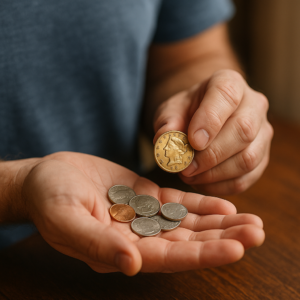
Rare State Quarters Worth Money: 8 High-Value Coins Hiding in Everyday Pocket Change
 admin
adminWhen the United States Mint launched the 50 State Quarters Program in 1999, it ignited the largest numismatic wave in American history. Over 140 million people began sorting through pocket change, stashing state designs into cardboard maps and velvet-lined albums. Because the Mint produced over 34 billion coins across the ten-year series (1999–2008), the vast majority of circulating quarters will never be worth more than their twenty-five-cent face value.
Yet, that massive production volume is precisely why high-value rarities exist. When dies strike hundreds of thousands of blanks per day at blistering speeds, mistakes happen. Dies crack, hubbing misalignments create dramatic doubled details, foreign grease clogs design recesses, and occasionally, mismatched dies or foreign planchets sneak into production.
Before you drop your spare change into a vending machine or toll bucket, inspect your coins. Several notable rare state quarters worth money remain active in general circulation. Below is your field guide to the eight most valuable State Quarter discoveries, how to spot them, and what they are worth.
---
The Top 8 Rare State Quarters to Look For
1. 2004-D Wisconsin Quarter: Extra Leaf High (FS-901)
In late 2004, a sharp-eyed collector in Tucson, Arizona, noticed something bizarre on a freshly minted Denver-minted Wisconsin quarter: an additional, slender leaf extending upward from the left side of the corn ear on the reverse.
Cataloged as FS-901, the "Extra Leaf High" variety features a clear, raised husking line pointing directly toward the upper rim of the corn ear. Numismatists generally agree this anomaly occurred when a die tool or gouge marked the working die during production or maintenance.
2. 2004-D Wisconsin Quarter: Extra Leaf Low (FS-902)
Discovered alongside the High Leaf variety, the 2004-D Wisconsin "Extra Leaf Low" (FS-902) is equally famous and slightly less common in lower grades. On this variety, the auxiliary line appears lower on the corn husk, sweeping outward and downward, nearly touching the wheel of cheddar cheese below.
Both the High Leaf and Low Leaf varieties caused a nationwide media frenzy when discovered, and their desirability among variety collectors has held steady for decades.
If you want to expand your eye for variety detection beyond modern quarters, reviewing our guide on coin errors and varieties offers a breakdown of how die modifications differ from everyday striking errors.
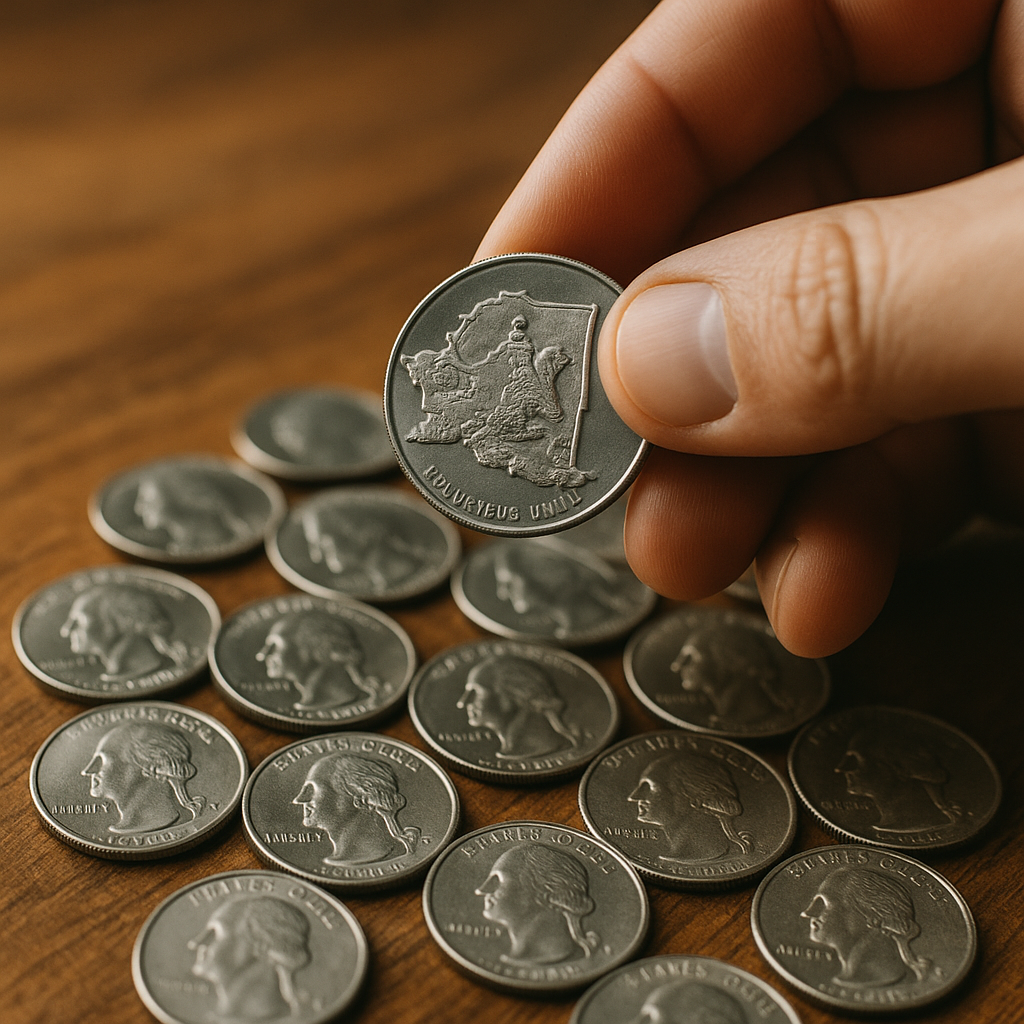
3. 2005-P Minnesota Quarter: Doubled Die Reverse Extra Tree (FS-801)
The 2005-P Minnesota quarter features one of the most prolific hubbing anomalies of the entire 50 State Quarters series. Mint employees adjusting the single-squeeze hubbing presses produced multiple working dies with secondary rotational spread. As a result, there are more than 60 cataloged Doubled Die Reverse (DDR) varieties for this coin.
The most valuable and distinct among them is FS-801 (WDDR-001), commonly known as the "Extra Tree" variety.
For a deeper look into modern clad errors from the same era, explore our detailed catalog of quarter errors worth money.
4. 2005-P Kansas Quarter: 'In God We Rust' Error
Perhaps the most tongue-in-cheek modern coin error in circulation, the 2005-P Kansas "In God We Rust" quarter is an authentic striking anomaly caused by heavy die grease.
During high-speed striking, machine grease mixed with metallic dust can pack into the shallow incuse cavities of the coin die. When the die strikes a planchet, the grease prevents the metal from flowing into the recesses. On these Kansas quarters, grease completely filled the letter "T" in the national motto "IN GOD WE TRUST," leaving the obverse reading: "IN GOD WE RUST."
5. 1999-P Delaware Quarter: 'Spitting Horse' Die Crack
As the very first release in the 50 State Quarters series, the 1999-P Delaware quarter saw intense public interest. One particular working die developed an internal fracture that produced a visually hilarious result: Caesar Rodney's galloping horse appears to be spitting.
This variety was created by a raised die crack that runs from the horse's mouth diagonally down toward the rim, just above the letters "CA" in "CAESAR".
6. 1999 State Quarters on Experimental Planchets
In 1999, the U.S. Mint prepared to debut the new Sacagawea Golden Dollar (scheduled for 2000 release). To test how the new manganese-brass alloy blanks would behave in automated vending equipment and sorting sensors, the Mint struck test runs using existing 1999 quarter dies.
While most of these test pieces were melted, several dozen escaped into circulation on quarters honoring Delaware, Pennsylvania, New Jersey, Georgia, and Connecticut.
These unusual transitional pieces are consistently listed among the most valuable error coins in circulation.
7. Major Off-Center and Broadstruck State Quarters
While minor off-center strikes (1% to 3%) are common and carry virtually no premium, State Quarters that escaped the retaining collar or were struck 10% to 50% off-center are highly prized.
8. The 2000 Washington Quarter / Sacagawea Dollar "Mule"
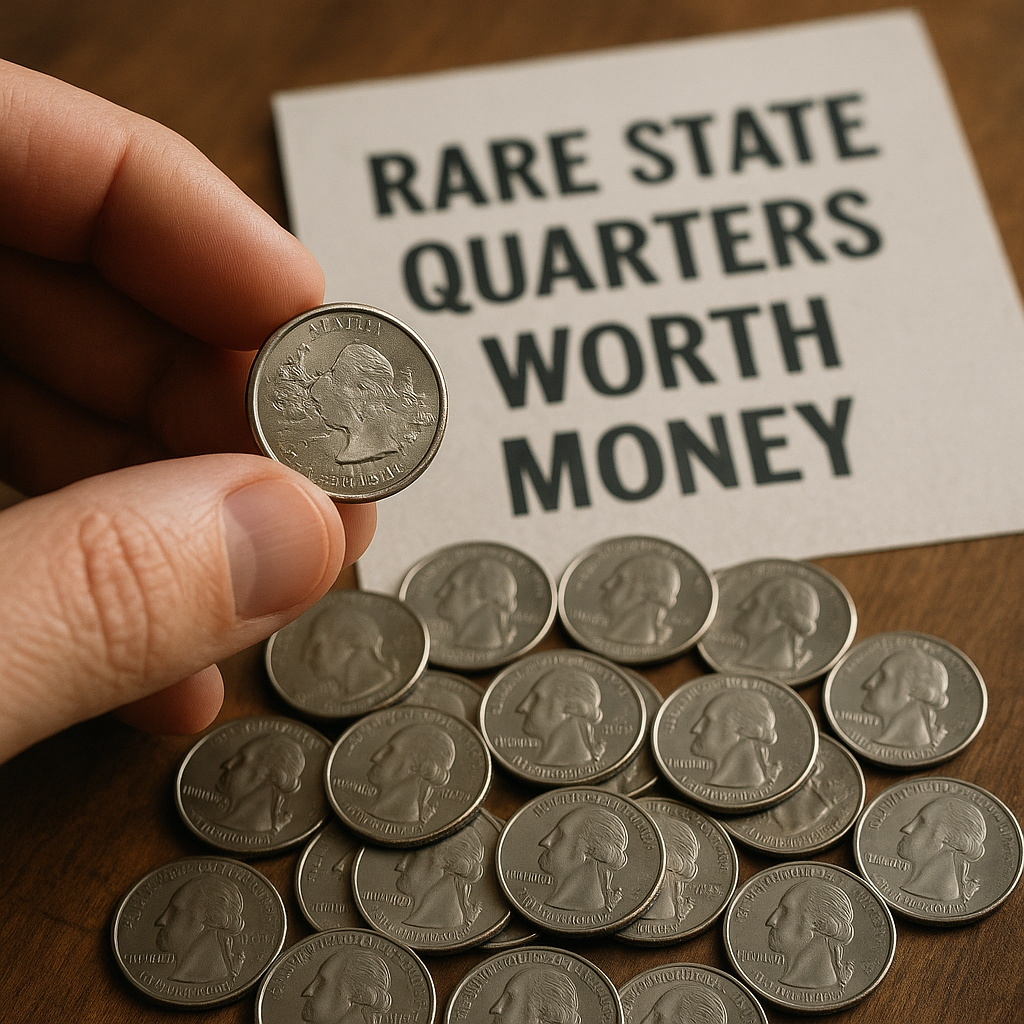
Although it trades primarily in specialized high-end auctions, no list of modern quarter errors is complete without the most legendary striking mistake of the 21st century: the 2000 Washington Quarter Obverse / Sacagawea Dollar Reverse Mule.
A "mule" occurs when two mismatched dies are mistakenly paired. In early 2000, a press operator at the Philadelphia Mint mistakenly paired a 50 State Quarter obverse die (showing George Washington, but without the standard denomination) with a Sacagawea dollar reverse die on a golden dollar planchet.
---
State Quarter Error Quick Reference Guide
Use this quick-scan pricing table to prioritize your pocket change checks:
| State Quarter Variety / Error | Type | Key Diagnostic Marker | Circulated Value | Uncirculated (MS65+) Value |
|---|---|---|---|---|
| 2004-D Wisconsin Extra Leaf High | Die Variety (FS-901) | Curved leaf pointing upward on ear of corn | $50 – $125 | $300 – $2,500+ |
| 2004-D Wisconsin Extra Leaf Low | Die Variety (FS-902) | Downward leaf curving toward cheese wheel | $40 – $100 | $250 – $1,800+ |
| 2005-P Minnesota Doubled Die | Doubled Die Reverse (FS-801) | Secondary tree trunk/foliage on 3rd tree | $15 – $40 | $100 – $800 |
| 2005-P Kansas 'In God We Rust' | Struck-Through Grease | Missing letter 'T' in 'TRUST' | $20 – $50 | $75 – $175 |
| 1999-P Delaware 'Spitting Horse' | Die Crack | Raised line protruding from horse's mouth | $10 – $25 | $40 – $150 |
| 1999 Experimental Planchet | Wrong Alloy / Planchet | Golden-green tint; weights 5.9–6.1g | $1,500+ | $2,500 – $4,500+ |
| Major Off-Center (20%–50%) | Mechanical Strike Error | Obverse/reverse shifted off blank with date visible | $50 – $150 | $200 – $500+ |
| 2000 Quarter/Dollar Mule | Mismatched Die Mule | Washington front paired with eagle dollar back | Rare (N/A) | $100,000 – $200,000+ |
---
How to Authenticate and Protect Your State Quarter Finds
If you believe you have located one of these varieties in your pocket change, follow these three rules before doing anything else:
1. Never Clean the Coin: Even gentle wiping with a microfiber cloth or rinsing with tap water can leave microscopic hairlines across the fields. Cleaning instantly destroys collector premiums, often reducing the value of a rare coin by 50% or more.
2. Verify with 10x Magnification: Many coins in change suffer from mechanical doubling (also called strike or shelf doubling), where loose dies bounce across the coin surface, creating flat, step-like doubling. Authentic doubled dies feature rounded, distinct secondary impressions. If you enjoy hunting everyday rarities, check our master list of rare pocket change discoveries to train your eye on what authentic varieties look like.
3. Store in a Protective Holder: Place your find immediately into a 2x2 cardboard coin flip or a non-PVC plastic snap-case. This prevents further contact marks and preserves the surface condition.
Happy hunting, and remember to look twice before spending that modern quarter—a few seconds with a magnifying glass could turn ordinary pocket change into a serious payday.
Enjoyed this guide? Join our free collector email list to get step-by-step variety checklists, real-world pocket change finds, and updated error values sent directly to your inbox.
Enjoyed this guide? Sign up for a free Rich Off Error Coins membership to get more expert guides like this one sent straight to your inbox.
\ Get the latest news /